Carbon dioxide is used notably in the food and beverage industry, beverage carbonation, cooling, water treatment and fire extinguishing equipment. It can also form during combustion, fermentation or the decomposition of organic matter.
At ambient temperature and pressure, it is a colourless, odourless gas that is heavier than air. In its solid form, it is known as dry ice.
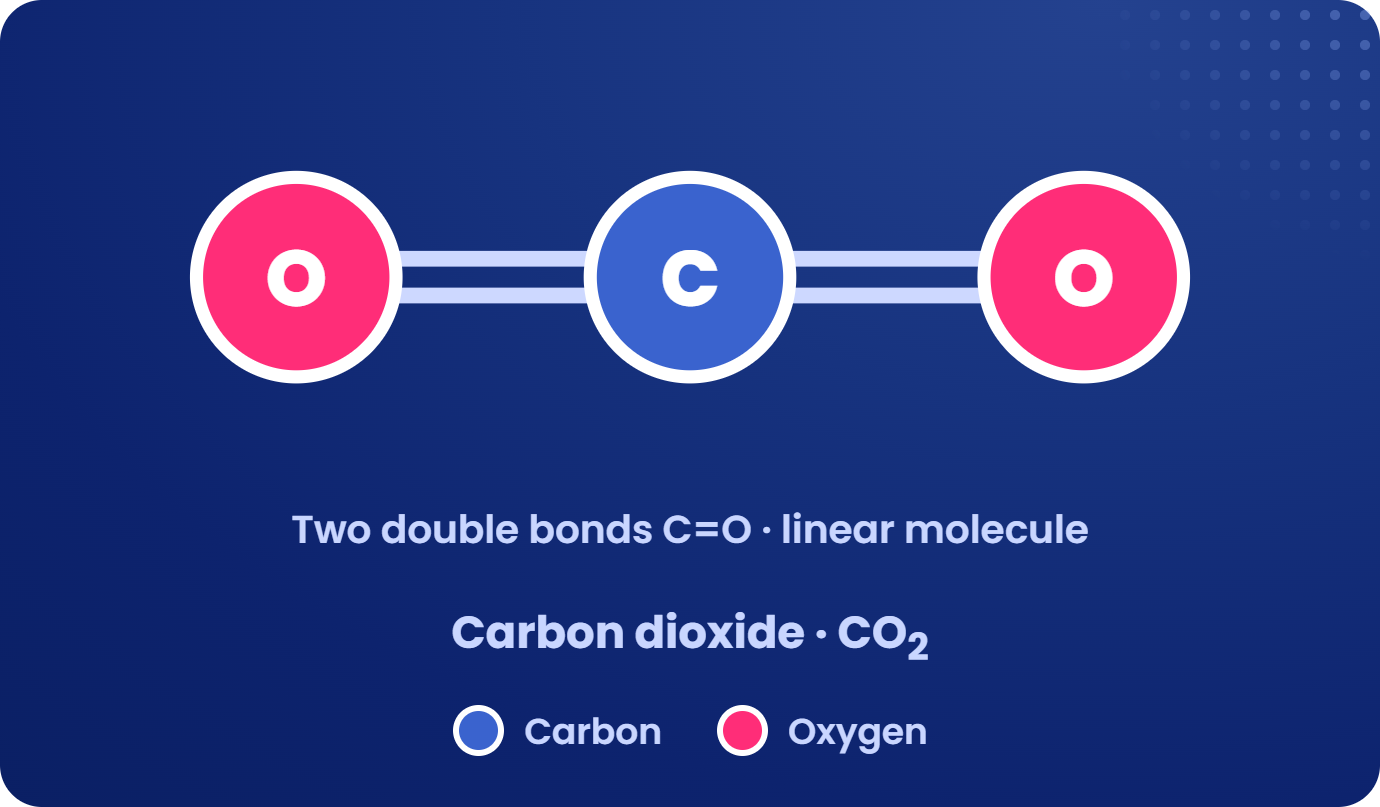
1Main properties
At atmospheric pressure, dry ice changes directly from a solid to a gas: −78.5 °C is a sublimation temperature, not a boiling point.
2What are the hazards?
CO₂ is non-combustible, but it can cause severe poisoning when it accumulates in a poorly ventilated location, particularly a cellar, tank or confined space.
Its hazards are not limited to oxygen displacement: a high concentration of CO₂ in the air increases blood CO₂ levels, known as hypercapnia, and causes blood acidification. Exposure may cause faster breathing, headaches and dizziness, followed by unconsciousness, seizures and death. These effects can develop rapidly at high concentrations.
Contact with dry ice or CO₂ at very low temperatures can also cause cold burns.
3What occupational exposure limits apply?
The INRS occupational exposure limits database, updated in April 2024, reports the following indicative regulatory occupational exposure limit established in France in 2007:
| Reference period | ppm | mg/m³ |
|---|---|---|
| 8-hour average | 5,000 | 9,000 |
| Short-term | Not specified | Not specified |
5,000 ppm corresponds to 0.5% by volume. This 8-hour average is neither an instantaneous safety limit nor, on its own, a gas detector alarm setting.
4How can risks be prevented?
Prevention relies on enclosed processes wherever possible, capturing emissions at source and providing suitable ventilation. The risk assessment determines atmospheric monitoring requirements.
Measuring oxygen does not replace measuring CO₂: carbon dioxide’s specific health effects justify monitoring this gas whenever the risk is identified. Fixed or portable detectors can measure its concentration.
Cylinders must be stored and used upright, secured and protected from heat, in a well-ventilated area, in accordance with the supplier’s instructions.
In the event of a leak, evacuate the area and follow emergency procedures. Only trained personnel with suitable protective equipment should intervene. Self-contained breathing apparatus must be available for emergency response.
Sources: INRS, Toxicological Factsheet No. 238, “Carbon dioxide”, June 2020 edition, in French; INRS occupational exposure limits database, “Carbon dioxide”, updated April 2024, in French.