Carbon monoxide is used notably in chemical synthesis, in metallurgy as a reducing agent and in calibration gas mixtures.
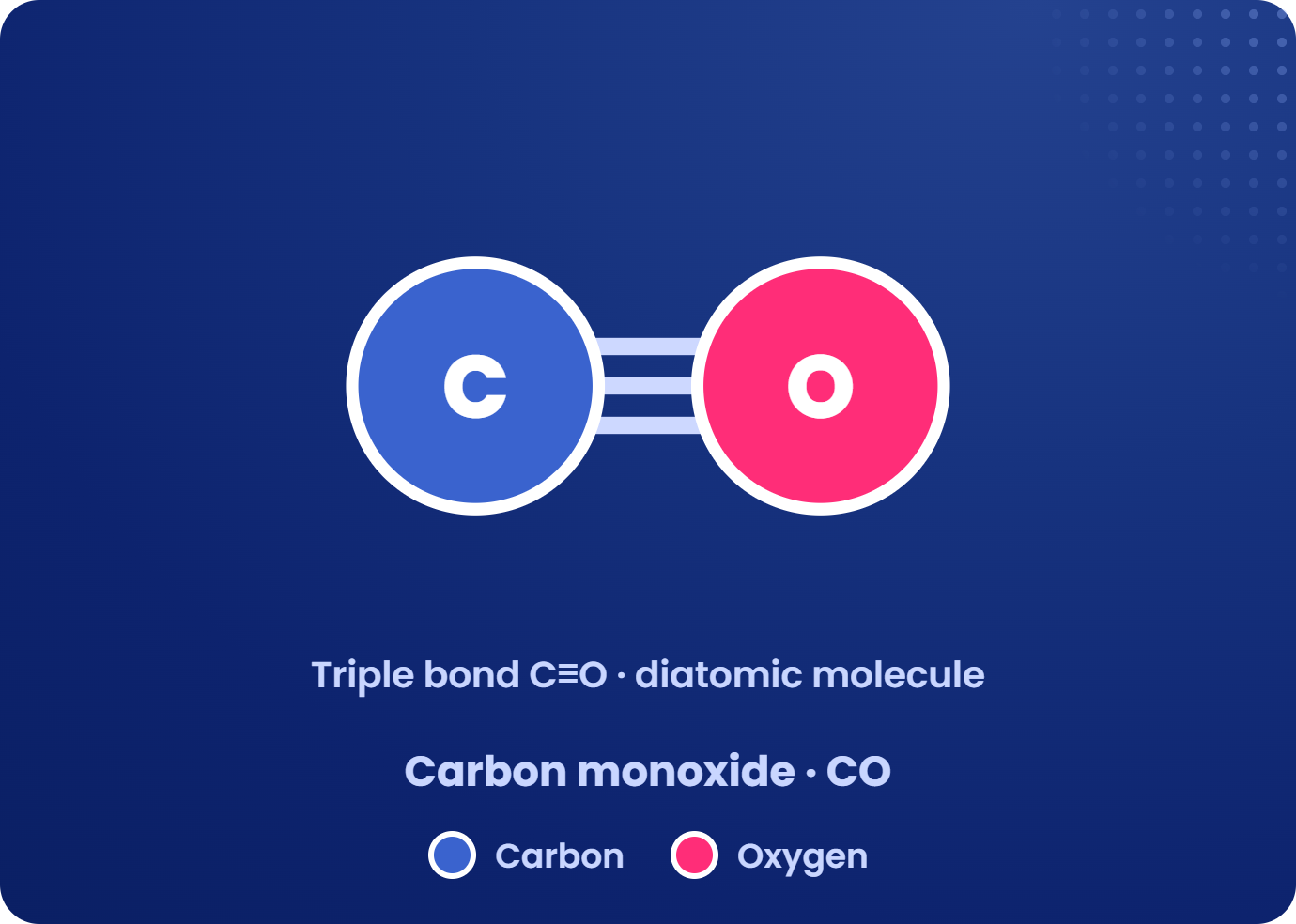
It can be produced during combustion, notably by engines, heating appliances or fires. At room temperature, it is a colourless, odourless gas with a density close to that of air. It must not be confused with carbon dioxide, CO₂.
1Main properties
These values apply to pure carbon monoxide. The characteristics of gas mixtures depend on their composition.
2What are the hazards?
CO is toxic if inhaled. It binds to haemoglobin to form carboxyhaemoglobin, disrupting oxygen delivery and release to tissues. The heart and brain are particularly sensitive to this oxygen deprivation.
It is also classified as toxic to reproduction, Category 1A, with the hazard statement “May damage the unborn child”. Repeated or prolonged exposure can cause serious organ damage.
Carbon monoxide is also an extremely flammable gas. Its toxic hazards must be assessed separately from its fire and explosion hazards.
3What occupational exposure limits apply?
The INRS occupational exposure limits database, updated in April 2024, reports the following binding regulatory occupational exposure limits established in France in 2019:
| Reference period | ppm | mg/m³ |
|---|---|---|
| 8-hour average | 20 | 23 |
| Short-term, 15 minutes | 100 | 117 |
A noise notation indicates the possibility of hearing damage when exposure occurs together with noise.
These limits do not, on their own, constitute gas detector alarm settings.
4How can risks be prevented?
Prevention relies on controlling emissions, using closed processes wherever possible, capturing gas at source and providing suitable ventilation.
Atmospheric exposure must be monitored regularly. A gas detection system with alarms can complement preventive measures. The absence of odour never rules out the presence of CO.
Installations must also control ignition sources and electrostatic discharges. Operators must be trained in the hazards, alarm responses and emergency procedures.
Cylinders must be used upright, secured and protected from sunlight and heat sources.
Sources: INRS, Toxicological Factsheet No. 47, “Carbon monoxide”, April 2021 edition, in French; INRS occupational exposure limits database, “Carbon monoxide”, updated April 2024, in French.