Chlorine dioxide, also known as chlorine(IV) oxide, is used notably for water disinfection, industrial water treatment and the bleaching of paper pulp and textiles.
At ambient temperature and pressure, it is a yellow-green to reddish-brown gas with a pungent odour. It is soluble in water and is used notably in aqueous solutions. It is a powerful oxidising agent and an unstable compound.
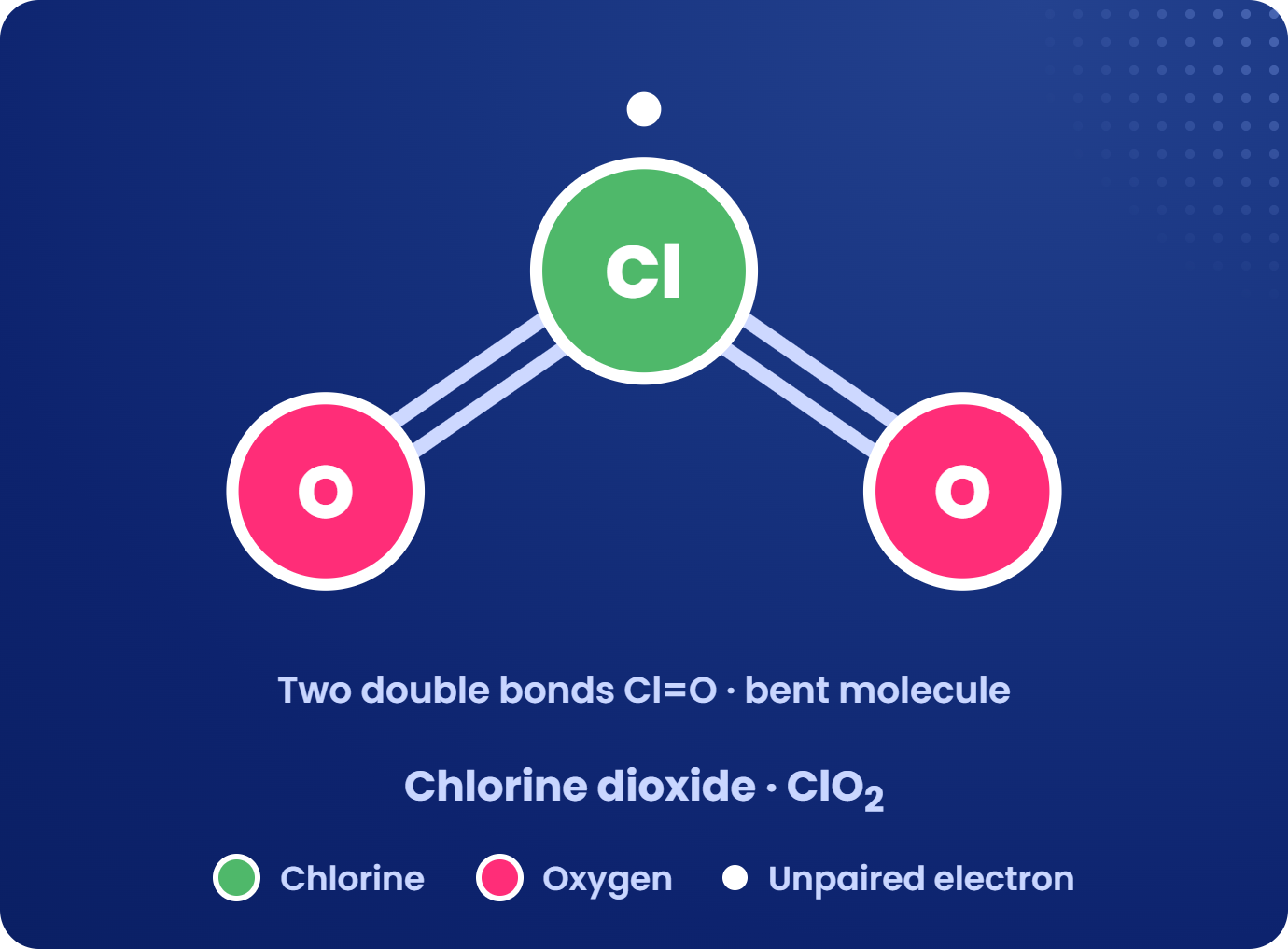
1Main properties
These values apply to chlorine dioxide, rather than the overall properties of its aqueous solutions. The stated solubility depends on temperature and pressure conditions.
2What are the hazards?
Chlorine dioxide gas is fatal if inhaled and corrosive. It can cause serious eye and skin damage, as well as severe respiratory tract irritation.
Exposure may cause nasal irritation, coughing, headaches and difficulty breathing. Serious respiratory effects may develop after a delay, and lasting damage is possible.
Chlorine dioxide is an oxidising gas: it can cause or intensify a fire. Its instability also creates a risk of explosive decomposition, particularly when exposed to heat or light. It may react violently with organic materials, combustible substances and many other incompatible materials.
3What occupational exposure limits apply?
The INRS occupational exposure limits database reports the following non-regulatory guideline limits established in France through ministerial circulars in 1984:
| Reference period | ppm | mg/m³ |
|---|---|---|
| 8-hour average | 0.1 | 0.3 |
| Short-term, 15 minutes | 0.3 | 0.8 |
These occupational exposure limits do not, on their own, constitute gas detector alarm settings.
4How can risks be prevented?
Prevention relies on enclosed processes wherever possible, capturing emissions at source and providing suitable ventilation. Atmospheric exposure must be assessed regularly.
Chlorine dioxide gas is generated at the point of use because of its instability. INRS provides for storage only as highly diluted solutions. Storage conditions must follow the supplier’s instructions, particularly regarding temperature, light and incompatible materials.
Gloves, protective clothing, eye protection and any respiratory protective equipment must be selected according to the risk assessment, concentration and safety data sheet instructions.
Sources: INRS, Toxicological Factsheet No. 258, “Chlorine dioxide”, May 2022 edition, in French; INRS occupational exposure limits database, “Chlorine dioxide”, updated September 2022, in French.