Diborane, also known as boroethane, is a boron compound used notably as a doping gas in the electronics and photovoltaic industries, and as a reducing agent in organic synthesis. At room temperature, it is a colourless, highly reactive and extremely flammable gas. It reacts rapidly with water and moisture.
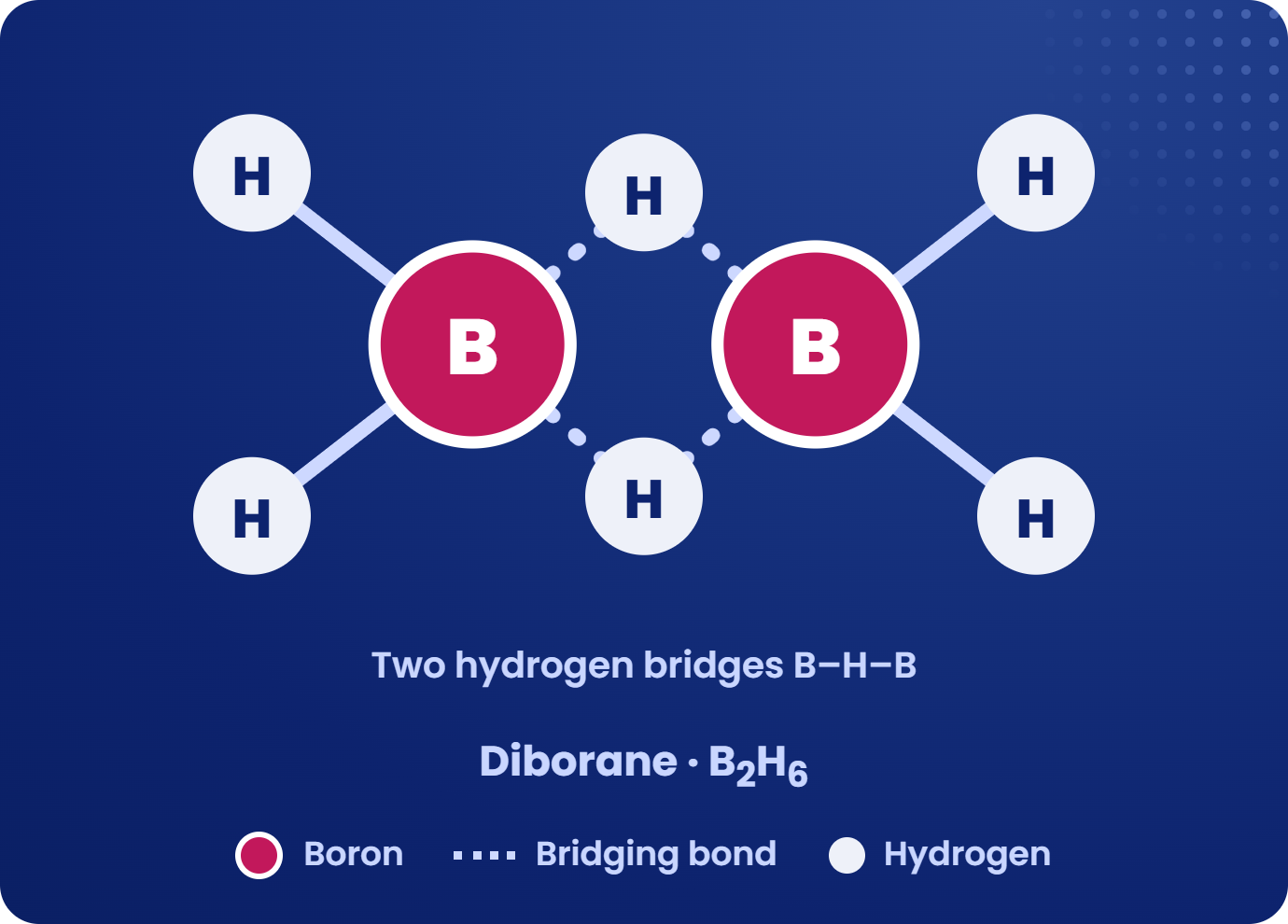
1Main properties
These values apply to pure diborane. The characteristics of a gas mixture depend on its composition.
2What are the hazards?
Diborane is highly toxic by inhalation. It can cause severe respiratory tract irritation, coughing, chest tightness and difficulty breathing. Severe exposure may cause pulmonary oedema, with symptoms that can be delayed. Its odour does not provide sufficient warning of hazardous exposure.
It can ignite spontaneously on contact with air, particularly in the presence of moisture or contaminants. Its reaction with water releases considerable heat and flammable hydrogen. It also reacts violently with oxidising agents and halogens.
INRS reports respiratory disorders and neurological symptoms following chronic exposure, including headaches, fatigue and visual disturbances.
3What occupational exposure limits apply?
The INRS factsheet dated 2014 reports the following indicative occupational exposure limit for France:
| Reference period | ppm | mg/m³ |
|---|---|---|
| 8-hour average | 0.1 | 0.1 |
| Short-term | Not specified in this factsheet | Not specified in this factsheet |
These values are reproduced as listed in that edition. They do not, on their own, constitute gas detector alarm settings.
4How can risks be prevented?
Prevention relies on closed, leak-tight systems, suitable ventilation and purging circuits with an inert gas according to established procedures. Equipment must be compatible with diborane and suitable for the explosive atmosphere hazard.
Atmospheric monitoring requires detection equipment sufficiently sensitive to diborane. Gloves, protective clothing, eye protection and respiratory protective equipment must be selected according to the risk assessment. Atmosphere-supplying breathing apparatus is required for certain operations and emergency response.
Storage conditions, particularly temperature, must follow the supplier’s instructions to limit decomposition. Containers must be protected from heat and separated from incompatible substances.
In the event of a leak, evacuate the area and follow emergency procedures. Only trained personnel wearing suitable protective equipment should intervene.
Source: INRS, Toxicological Factsheet No. 188, “Boranes”, 2014 edition, in French.