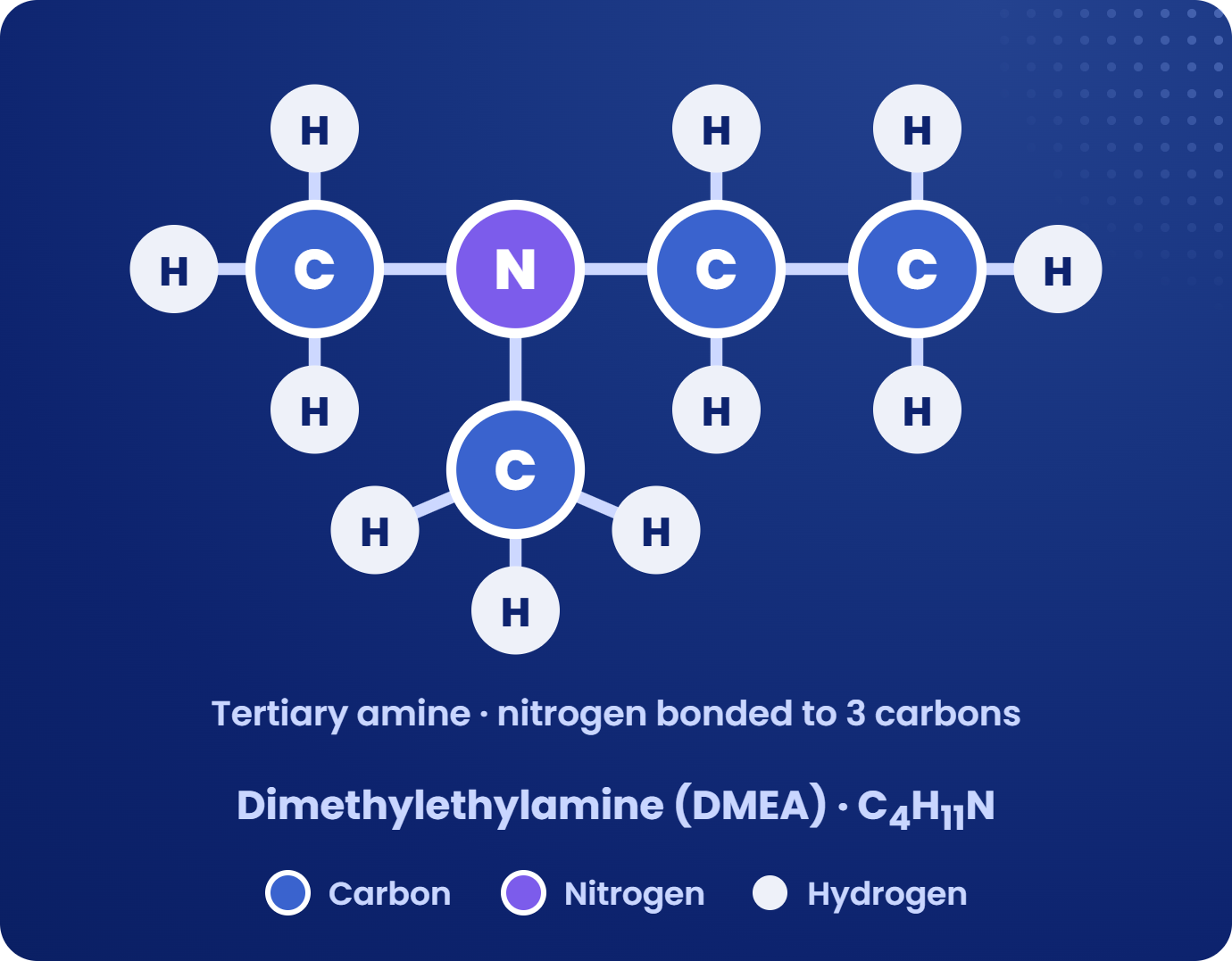
N,N-Dimethylethylamine, also known as ethyldimethylamine or DMEA, is an amine used mainly in foundries to cure resins in the cold-box coremaking process. It also serves as a polymerisation catalyst.
At room temperature, it is a highly volatile, colourless liquid with a strong ammonia-like odour. It is miscible with water. Olfactory adaptation can occur quickly, so its odour is not a reliable way to monitor exposure.
1Main properties
These values apply to pure N,N-dimethylethylamine.
2What are the hazards?
DMEA is highly flammable, corrosive and harmful if inhaled or swallowed. Contact with the liquid can cause skin burns and serious eye damage. Its vapours can cause severe respiratory tract irritation.
Exposure may also cause visual disturbances, including foggy or bluish vision and halos around light sources. These effects can develop without immediate discomfort during exposure. Although generally reversible after exposure ends, they increase the risk of accidents.
DMEA reacts strongly with concentrated acids and powerful oxidising agents. Diluting it with water releases considerable heat. Its combustion produces toxic fumes.
3What occupational exposure limits apply?
The INRS factsheet dated 2006 reports the following indicative, non-regulatory occupational exposure limits for France, published in a ministerial circular:
| Reference period | ppm | mg/m³ |
|---|---|---|
| 8-hour average | 5 | 15 |
| Short-term, 15 minutes | 25 | 75 |
These limits do not, on their own, constitute gas detector alarm settings. Compliance with them does not remove the need to prevent the visual disturbances described by INRS.
4How can risks be prevented?
Prevention relies on closed processes wherever possible, capturing vapours at source and providing suitable ventilation. Regular atmospheric monitoring must be organised.
Keep away from heat, flames and sparks, and prevent electrostatic discharges. Equipment must be suitable for the explosive atmosphere hazard.
Gloves, protective clothing and eye protection must be compatible with the substance. Suitable respiratory protection may be necessary for certain operations. Safety showers and eyewash facilities should be available nearby.
Store in compatible, closed and labelled containers in a cool, ventilated area with suitable secondary containment, away from acids and oxidising agents.
Source: INRS, Toxicological Factsheet No. 127, “N,N-Dimethylethylamine”, 2006 edition, in French.