Ethanol, also known as ethyl alcohol, is used as a solvent in paints, varnishes, inks, adhesives, perfumes and pharmaceutical products. It is also used in disinfectants, chemical synthesis and fuels.
At room temperature, it is a colourless, volatile liquid that is miscible with water. It is supplied pure, in aqueous solutions or in denatured form. Denatured products contain additional substances whose hazards must also be considered.
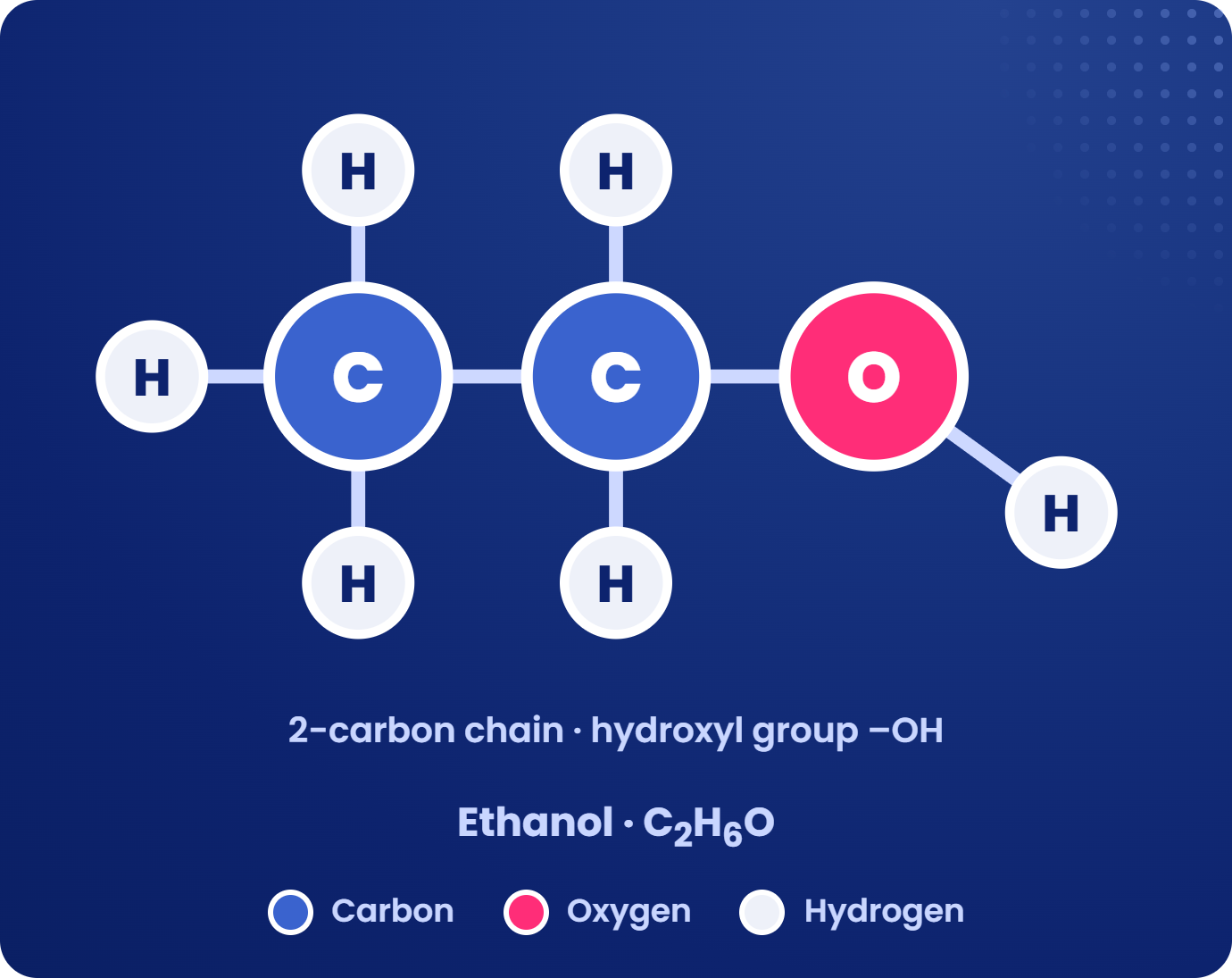
1Main properties
These values apply to pure ethanol. Its concentration in water notably affects the flash point: INRS reports 21 °C for a solution containing 70% ethanol by volume, measured using the closed-cup method.
2What are the hazards?
Ethanol is highly flammable. Its vapours can form explosive mixtures with air in the presence of an ignition source.
Splashes in the eyes cause pain and irritation. At high concentrations, inhaling vapours may cause eye and respiratory tract irritation, headaches, drowsiness and central nervous system depression.
Repeated exposure may cause irritation and impaired concentration or alertness. Repeated skin contact may also irritate the skin.
The IARC carcinogenic classification cited by INRS concerns ethanol in alcoholic beverages. It should not be presented as evidence of a carcinogenic risk from occupational inhalation of ethanol vapours.
3What occupational exposure limits apply?
The INRS factsheet dated November 2019 reports the following indicative, non-regulatory occupational exposure limits established in France in 1982:
| Reference period | ppm | mg/m³ |
|---|---|---|
| 8-hour average | 1,000 | 1,900 |
| Short-term, 15 minutes | 5,000 | 9,500 |
These occupational exposure limits do not, on their own, constitute gas detector alarm settings. Fire and explosion risks must be assessed separately.
4How can risks be prevented?
Prevention relies on enclosed processes wherever possible, capturing vapours at source and providing suitable ventilation.
Keep away from flames, sparks and hot surfaces. Prevent electrostatic discharges through suitable equipotential bonding and earthing. Equipment must be suitable for the explosive atmosphere hazard.
Gloves, protective clothing, eye protection and any respiratory protective equipment must be selected according to working conditions and the product’s composition.
Store in compatible, closed and labelled containers in a cool, ventilated area with suitable secondary containment, away from heat sources and oxidising agents.
Source: INRS, Toxicological Factsheet No. 48, “Ethanol”, November 2019 edition, in French.