Ethylene oxide, also known as oxirane or 1,2-epoxyethane, is used mainly as an intermediate in chemical manufacturing, notably to produce ethylene glycol and surfactants. It is also used to sterilise medical and surgical equipment.
At room temperature, it is a colourless gas, heavier than air, with a sweet, ether-like odour. Its odour is only detectable at concentrations far above the occupational exposure limit, so it does not provide a reliable warning.
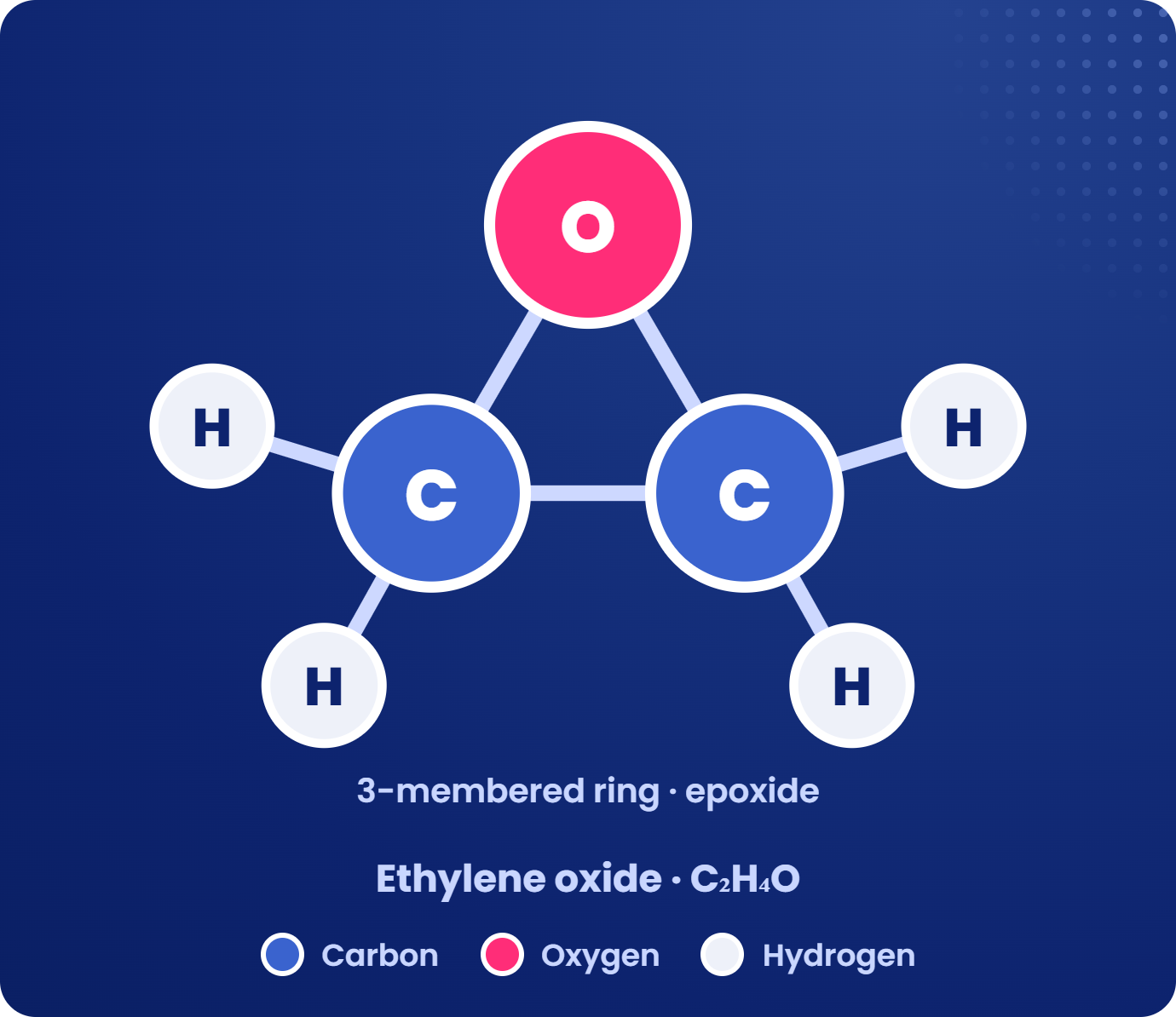
1Main properties
These values apply to pure ethylene oxide. The reported upper limit of 100% reflects a hazard that extends beyond mixtures with air: the substance can also undergo explosive decomposition or polymerisation.
2What are the hazards?
Ethylene oxide is extremely flammable, toxic if inhaled and corrosive. It can cause severe skin burns and serious eye damage, irritate the respiratory tract and cause drowsiness or dizziness.
It is classified as a Category 1B carcinogen, germ cell mutagen and reproductive toxicant under the CLP Regulation. These hazards require enhanced prevention of occupational exposure.
Highly reactive, it may react violently or polymerise explosively when heated or contaminated with incompatible substances, including acids, bases and certain metal compounds.
3What occupational exposure limits apply?
The INRS factsheet dated December 2022 reports the following binding regulatory occupational exposure limit established in France in 2020:
| Reference period | ppm | mg/m³ |
|---|---|---|
| 8-hour average | 1 | 1.8 |
| Short-term | Not specified in this factsheet | Not specified in this factsheet |
The skin notation indicates that skin absorption may contribute to overall exposure.
This average limit does not, on its own, constitute a gas detector alarm setting. Monitoring explosion hazards does not replace assessment of toxic exposure.
4How can risks be prevented?
Prevention relies on suitable installations, closed processes, capturing emissions at source and effective ventilation. Equipment and fitting materials must be compatible with ethylene oxide.
INRS recommends frequent atmospheric checks, preferably continuous monitoring supplemented by an automatic alarm.
Keep ignition sources away and prevent electrostatic discharges. Cylinders must be kept upright, secured and protected from heat.
Personal protective equipment must be selected according to the risk assessment. Atmosphere-supplying respiratory protection is recommended when the concentration is unknown or high, and for emergency response.
Sources: INRS, Toxicological Factsheet No. 70, “Ethylene oxide”, December 2022 edition, in French; INRS occupational exposure limits database, “Ethylene oxide”, updated October 2022, in French.