Ethylene, also known as ethene, is a raw material used in the chemical industry, notably to manufacture polyethylene and numerous chemical intermediates. It is also used to promote fruit ripening.
At room temperature, it is a colourless, extremely flammable gas with a density close to that of air.
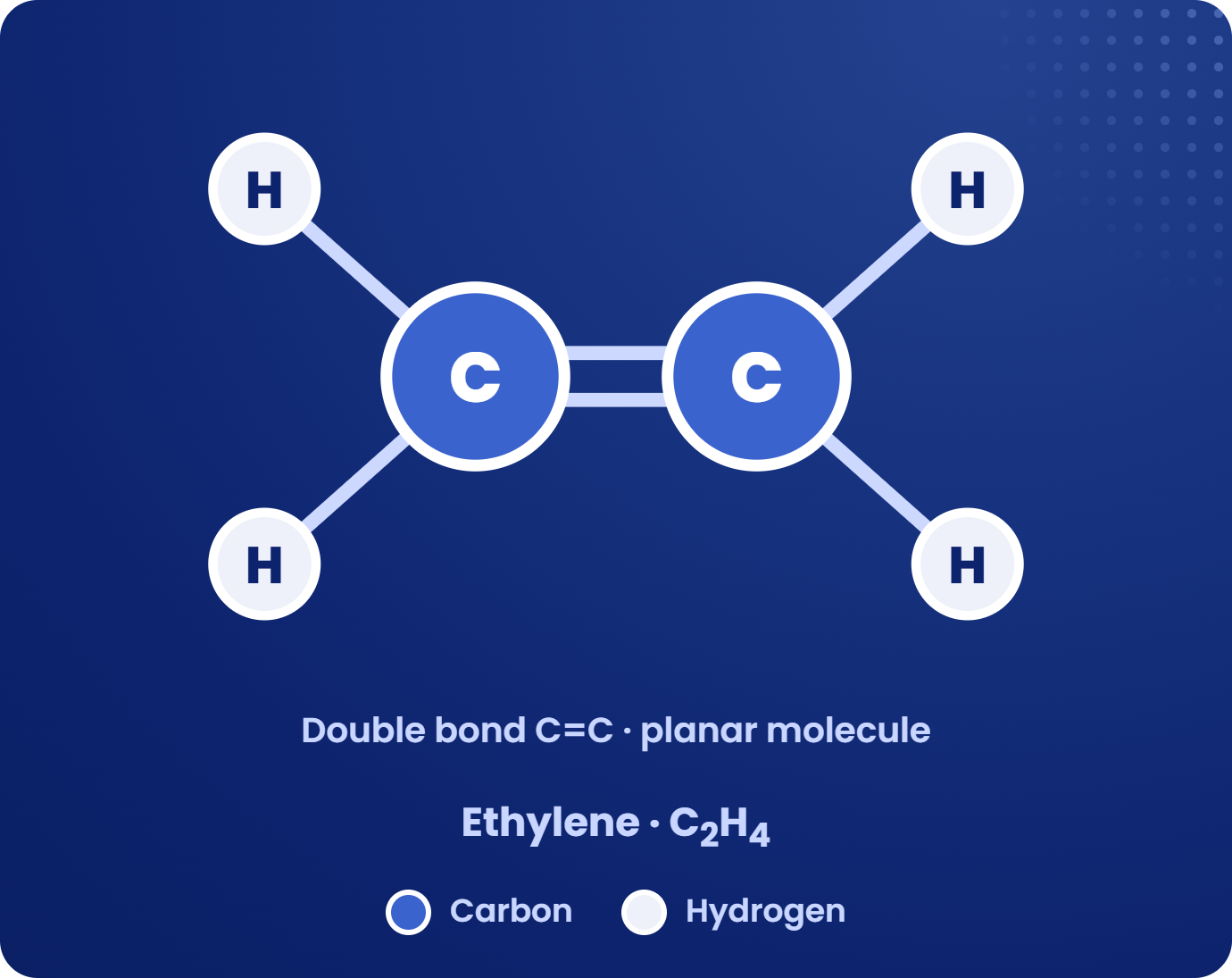
1Main properties
ICSC No. 0475 gives a lower explosive limit of 2.7%, whereas the INRS CarAtex database gives 2.3%. These figures must remain attributed to their respective sources; they do not directly define gas detector alarm settings.
2What are the hazards?
Ethylene forms explosive mixtures with air. Gas flow can generate electrostatic charges capable of causing ignition. It reacts with strong oxidising agents.
At high concentrations, it may cause drowsiness and unconsciousness. In a confined space, a leak can also reduce the oxygen concentration and cause potentially fatal asphyxiation.
3What occupational exposure limits apply?
No French occupational exposure limit was identified in the sources consulted for this factsheet.
The international chemical safety card lists a TLV-TWA of 200 ppm, an ACGIH reference value for an 8-hour average. This must not be presented as a French regulatory occupational exposure limit.
The absence of an identified French limit does not mean there is no hazard. Prevention must address both explosion risks and oxygen deficiency.
4How can risks be prevented?
Prevention relies on closed systems, suitable ventilation and control of ignition sources. Prevent electrostatic discharges and use equipment suitable for the explosive atmosphere hazard.
Store separately from strong oxidising agents. In the event of a leak, evacuate the area and follow emergency procedures. Interventions in a hazardous atmosphere require suitable self-contained breathing apparatus.
Sources: ILO/WHO, International Chemical Safety Card No. 0475, “Ethylene”, December 2022, in French; INRS, CarAtex database, “Ethene”, April 2018, in French; Air Liquide, Gas Encyclopedia, “Ethylene”.