Formaldehyde, also known as methanal, is used to manufacture resins, adhesives and numerous chemical intermediates. It is also used for tissue fixation in laboratories and in certain disinfection applications.
At room temperature, it is a colourless gas with a pungent, suffocating odour. It is generally supplied as an aqueous solution, known as formalin, sometimes containing added methanol to limit polymerisation.
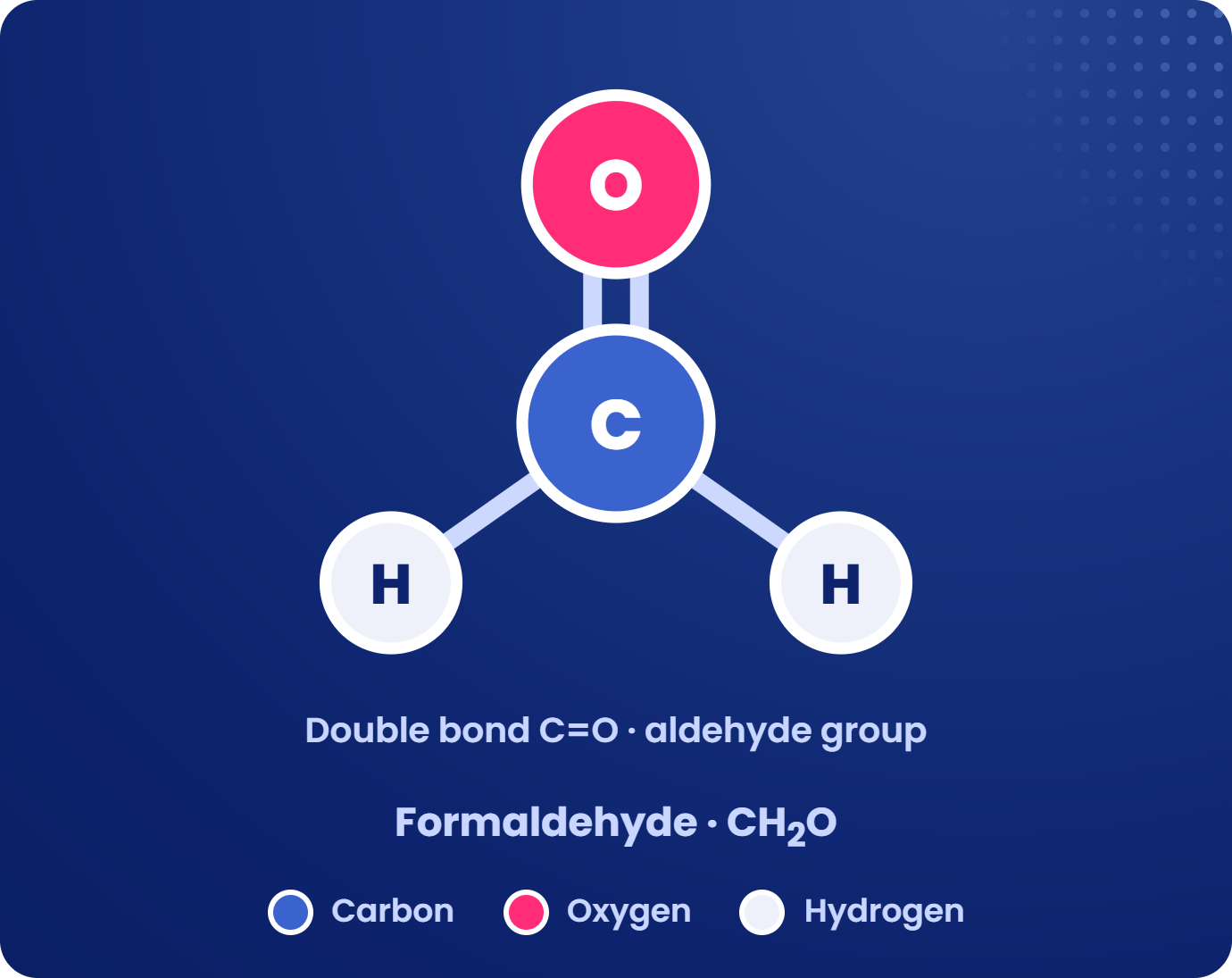
1Main properties
These values apply to pure formaldehyde. The properties of commercial solutions, particularly their flash point, depend on their formaldehyde and methanol concentrations.
2What are the hazards?
Formaldehyde is toxic, corrosive and a skin sensitiser. It can cause eye and respiratory tract irritation, burns and allergic skin reactions. The hazards of a solution depend notably on its concentration and other constituents.
It is classified as a Category 1B carcinogen and Category 2 germ cell mutagen under the CLP Regulation. IARC also classifies it as carcinogenic to humans, Group 1. These classifications belong to different systems and must not be confused.
The gas can form flammable mixtures with air. For aqueous solutions, the fire hazard depends notably on the presence of methanol.
3What occupational exposure limits apply?
The INRS factsheet dated March 2025 reports the following binding regulatory occupational exposure limits established in France in 2021:
| Reference period | ppm | mg/m³ |
|---|---|---|
| 8-hour average | 0.3 | 0.37 |
| Short-term, 15 minutes | 0.6 | 0.74 |
These limits carry a skin sensitisation notation. The transitional period for certain healthcare and embalming sectors ended on 11 July 2024.
These limits do not, on their own, constitute gas detector alarm settings.
4How can risks be prevented?
Prevention starts with seeking a safer substitute, followed by reducing exposure through closed processes, capture at source and suitable ventilation. Work involving formaldehyde exposure is subject to specific French rules for preventing risks from carcinogenic, mutagenic and reprotoxic agents (CMRs).
Atmospheric exposure must be monitored. Gloves, protective clothing, eye protection and any respiratory protective equipment must be selected according to the risk assessment and the solution’s exact composition.
Handling and storage instructions must account for both formaldehyde and any stabilisers present, particularly methanol.
Sources: INRS, Toxicological Factsheet No. 7, “Formaldehyde and aqueous solutions”, March 2025 edition, in French; INRS occupational exposure limits database, “Formaldehyde”, in French.