Germane, also known as germanium tetrahydride, is used notably in the manufacture of electronic and photovoltaic components. It is also used in chemical synthesis and certain laboratory applications.
At room temperature, it is a colourless gas, heavier than air, extremely flammable and fatal if inhaled.
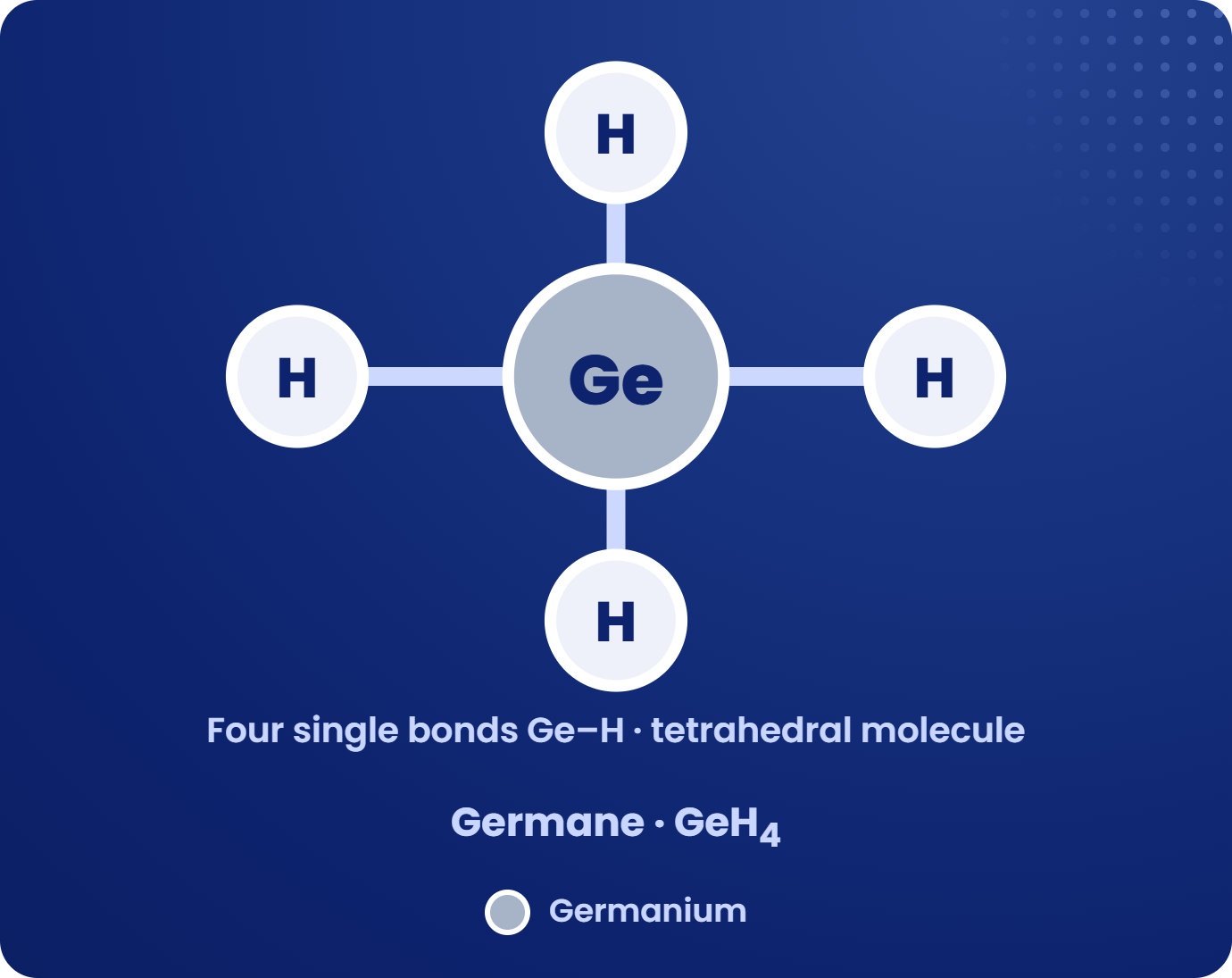
1Main properties
These values apply to pure germane. The characteristics of commercial mixtures depend on their composition.
2What are the hazards?
Germane can cause the destruction of red blood cells, known as haemolysis, which may lead to kidney damage. Symptoms may develop several hours after exposure. Headaches, weakness, dizziness, confusion and dark urine may occur.
It can ignite spontaneously on contact with air and reacts with halogens and oxidising agents. A leak can quickly create a hazardous atmosphere.
Pressurised containers may rupture when heated. Contact with the liquefied substance can also cause cold burns.
3What occupational exposure limits apply?
No French occupational exposure limit was identified in the sources consulted for this factsheet.
International Chemical Safety Card No. 1244 lists a TLV-TWA of 0.2 ppm, an ACGIH reference value for an 8-hour average. It must not be presented as a French regulatory limit.
This value does not, on its own, constitute a gas detector alarm setting.
4How can risks be prevented?
Prevention relies on leak-tight installations, suitable ventilation and control of ignition sources. Equipment must be compatible with germane and suitable for the explosive atmosphere hazard.
Storage must follow the supplier’s instructions, in a ventilated area with controlled access, protected from heat.
In the event of a leak, evacuate the area and follow emergency procedures. Interventions require trained personnel, suitable protective equipment and self-contained breathing apparatus.
Suspected exposure requires immediate medical attention, even if symptoms are initially absent, because of the risk of delayed effects.
Sources: ILO/WHO, International Chemical Safety Card No. 1244, “Germane”, June 2011, in English; Messer, Safety Data Sheet “Germane”, reference D-GeH4-060, 20 November 2023, in English.