Hydrogen chloride is used in the chemical industry, particularly to manufacture chlorinated compounds. At room temperature, it is a colourless gas with a pungent, irritating odour. Highly soluble in water, it forms a solution known as hydrochloric acid, used notably for metal pickling and water treatment. Dissolving the gas in water releases considerable heat.
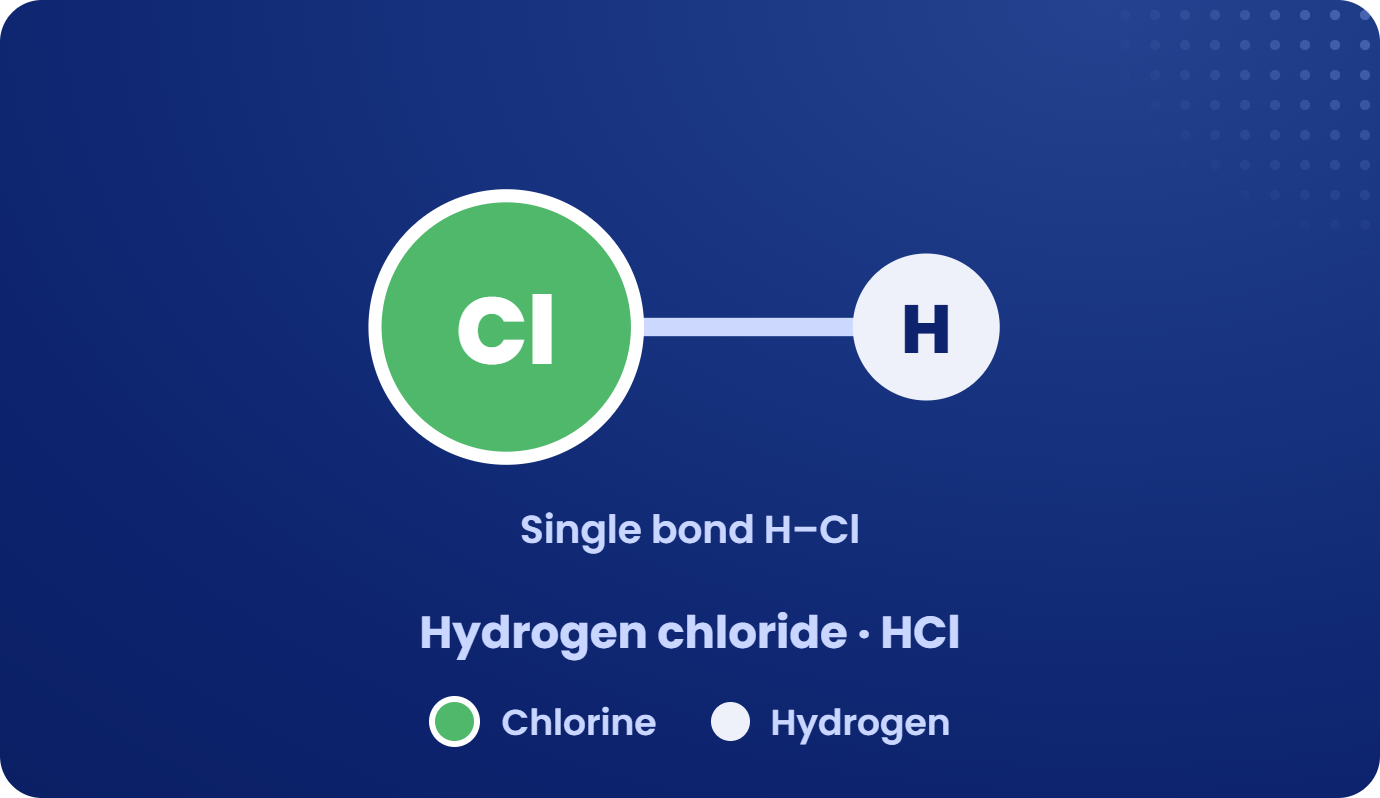
1Main properties
The values below apply to anhydrous hydrogen chloride, without water, rather than its aqueous solutions.
The properties of hydrochloric acid depend on its concentration and must not be confused with those of the anhydrous gas.
2What are the hazards?
Hydrogen chloride gas is toxic if inhaled and corrosive. Exposure can cause skin burns, serious eye damage and respiratory tract injuries. The severity depends notably on the concentration and duration of exposure.
Inhalation may cause coughing, difficulty breathing, bronchospasm or laryngeal oedema. Pulmonary oedema may develop up to 48 hours after exposure. Repeated exposure may notably cause chronic irritation, dental erosion and chronic bronchitis.
Hydrogen chloride is not combustible. However, in the presence of water, its reaction with certain metals can release flammable hydrogen, creating a fire or explosion hazard. It can also react with oxidising agents to release chlorine and with bases to produce considerable heat.
3What occupational exposure limits apply?
The INRS factsheet dated February 2019 reports the following values for France:
| Reference period | ppm | mg/m³ | Status |
|---|---|---|---|
| 8-hour average | Not specified | Not specified | No French 8-hour value listed in this factsheet |
| Short-term, 15 minutes | 5 | 7.6 | Binding regulatory occupational exposure limit, established in 2006 |
These occupational exposure limits do not, on their own, constitute gas detector alarm settings.
4How can risks be prevented?
Prevention relies on enclosing processes wherever possible, capturing emissions at source and providing suitable ventilation.
Gloves, protective clothing, eye protection and any respiratory protective equipment must be selected according to the risk assessment, the physical state of the product and, for solutions, their concentration.
When diluting a hydrochloric acid solution, gradually add the acid to the water while stirring. Never add water to the acid.
Store in compatible, closed and labelled containers in a cool, ventilated area, separated from bases and oxidising agents. For pressurised gas, follow the supplier’s instructions. Safety showers and eyewash facilities must be readily accessible nearby.