Hydrogen cyanide, also known as hydrocyanic acid, is used mainly in chemical synthesis, particularly to manufacture intermediates for polymer production. It can also be released when certain materials, such as polyurethanes, burn or when cyanides come into contact with an acid.
At atmospheric pressure, the pure substance is a highly volatile, colourless liquid that boils at approximately 26 °C. It can therefore be present in the air as vapour at room temperature. It is highly soluble in water.
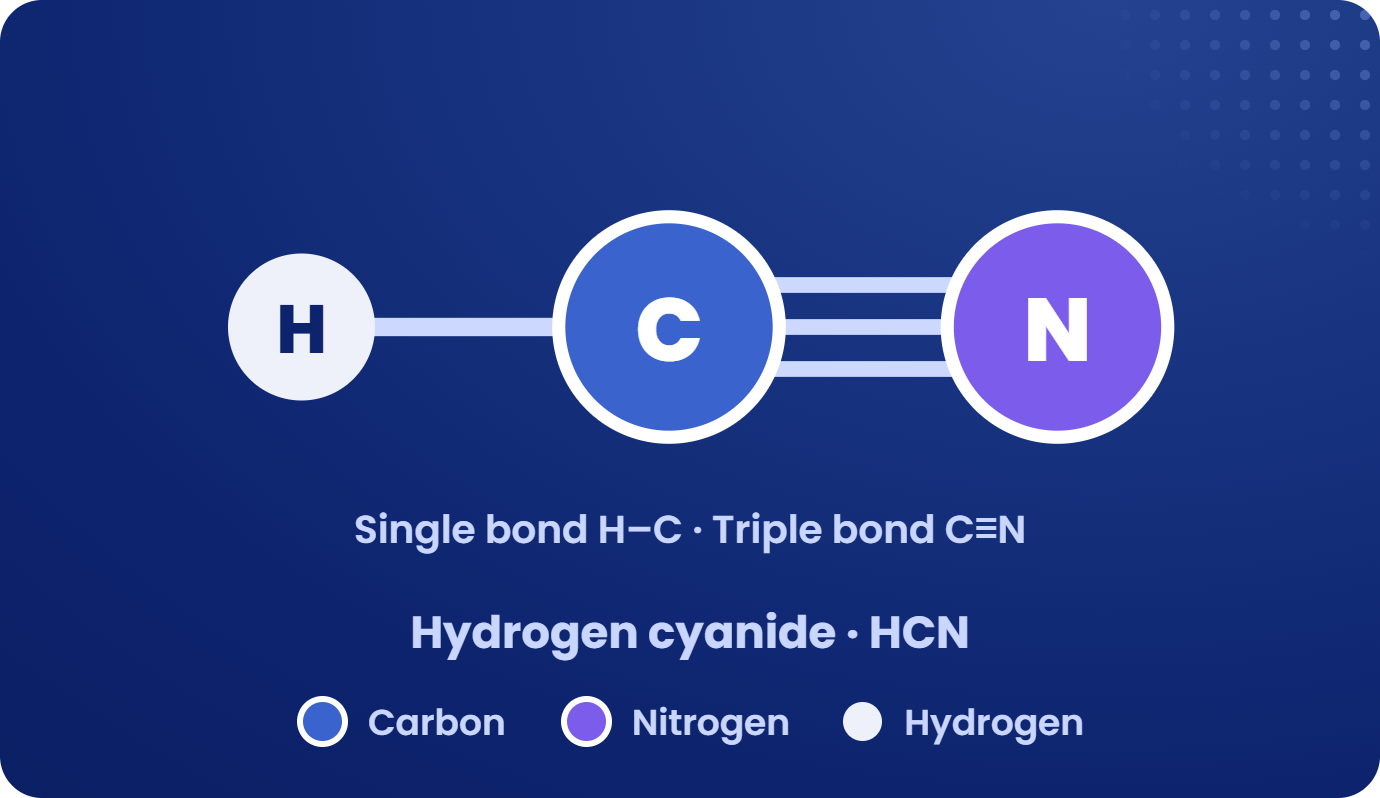
1Main properties
These values apply to pure hydrogen cyanide. The properties of aqueous solutions depend on their concentration.
2What are the hazards?
Hydrogen cyanide is extremely toxic. It enters the body through inhalation, ingestion and skin contact, then blocks cellular respiration: cells can no longer use oxygen properly.
Poisoning may cause headaches, dizziness, confusion and breathing difficulties. Severe cases can progress to seizures, coma and death within minutes.
It also presents a significant fire and explosion hazard. If insufficiently pure or stabilised, it may undergo violent, potentially explosive polymerisation. Its bitter almond odour is not a reliable way to assess exposure.
3What occupational exposure limits apply?
The INRS factsheet dated September 2022 reports the following binding regulatory occupational exposure limits established in France in 2019:
| Reference period | ppm | mg/m³ |
|---|---|---|
| 8-hour average | 0.9 | 1 |
| Short-term, 15 minutes | 4.5 | 5 |
INRS specifies that these values are expressed as cyanide, with a skin notation, indicating that skin absorption may contribute to overall exposure.
These limits do not, on their own, constitute gas detector alarm settings.
4How can risks be prevented?
Prevention relies on enclosed processes wherever possible, capturing emissions at source and providing suitable ventilation. Installations must control ignition sources and electrostatic discharges.
Gloves, protective clothing, eye protection and respiratory protective equipment must be selected according to working conditions and their compatibility with the substance. Protection against inhalation does not replace skin protection.
Store in compatible, closed and labelled containers in a cool, ventilated area accessible only to authorised personnel, away from heat and oxidising agents.
In the event of a leak, evacuate the area and follow emergency procedures. Only trained personnel with suitable protective equipment should intervene. Self-contained breathing apparatus must be available for emergency response.