Hydrogen fluoride is used notably to manufacture fluorinated compounds, treat metal and electronic surfaces, and etch glass. Its aqueous solution is called hydrofluoric acid.
The anhydrous substance is colourless, highly volatile and has a strongly irritating odour. With a boiling point of 19.5 °C at atmospheric pressure, it can be liquid or gaseous depending on the conditions. Its vapours form white fumes on contact with moisture.
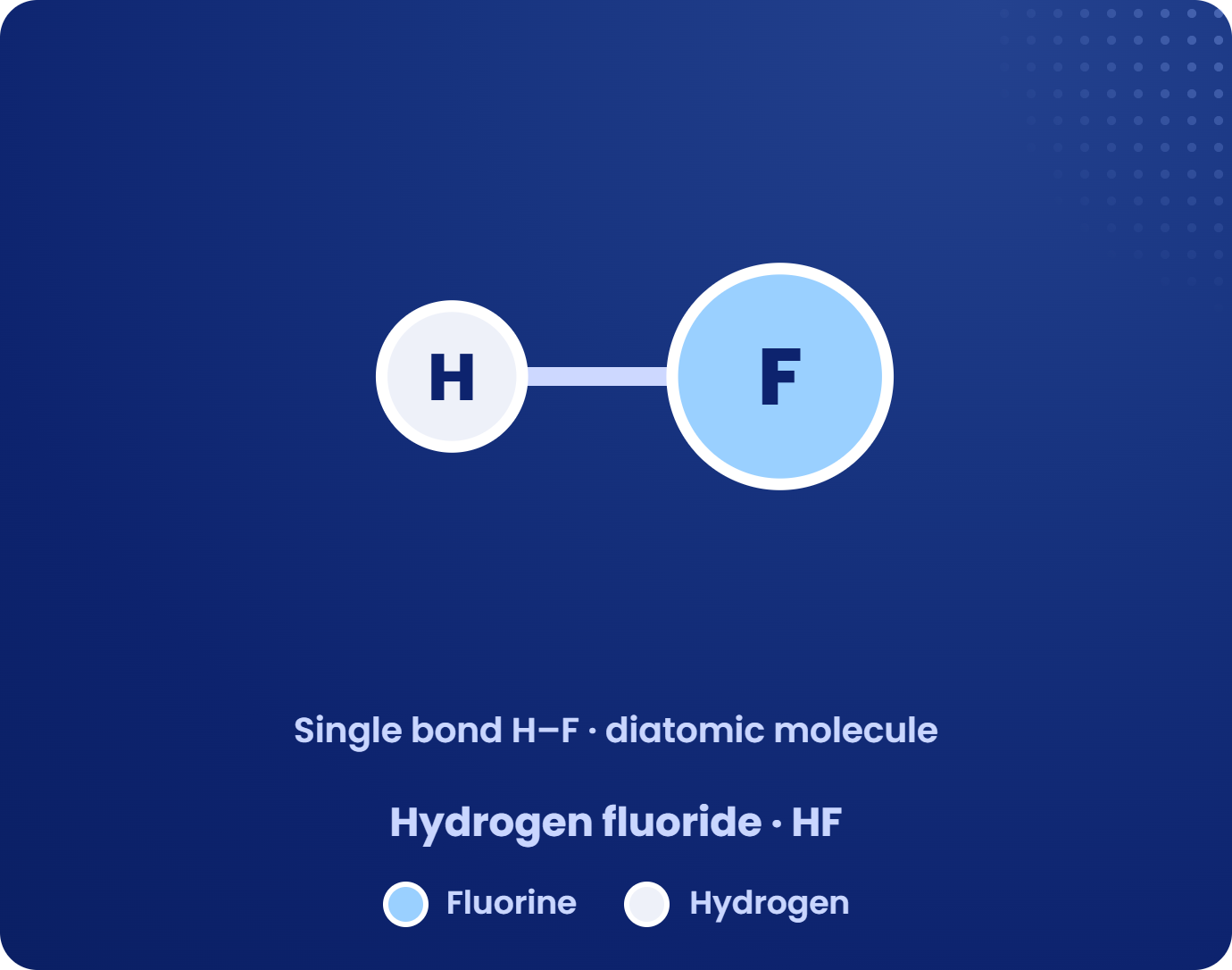
1Main properties
These values apply to anhydrous hydrogen fluoride. The properties of hydrofluoric acid solutions depend on their concentration.
2What are the hazards?
Anhydrous hydrogen fluoride is fatal if inhaled, in contact with skin or swallowed. It causes deep burns and serious eye damage. Aqueous solutions also present significant hazards, which vary with concentration.
Pain may be delayed, particularly after contact with a dilute solution, while tissue damage continues to develop. The absence of immediate pain therefore does not rule out serious exposure.
Fluoride ions can cause systemic poisoning, including a drop in blood calcium levels and heart rhythm disturbances. Inhalation may cause respiratory tract injuries and delayed pulmonary oedema.
HF attacks glass, ceramics and many other materials. Its aqueous solutions can react with metals, releasing flammable hydrogen.
3What occupational exposure limits apply?
The INRS occupational exposure limits database reports the following binding regulatory occupational exposure limits established in France in 2007:
| Reference period | ppm | mg/m³ |
|---|---|---|
| 8-hour average | 1.8 | 1.5 |
| Short-term, 15 minutes | 3 | 2.5 |
These limits apply to hydrogen fluoride. They do not, on their own, constitute gas detector alarm settings and do not account for the risk from skin contact.
4How can risks be prevented?
Prevention relies on enclosed processes wherever possible, capturing emissions at source and providing suitable ventilation. Equipment and containers must be compatible with HF and its concentration.
Gloves, protective clothing, eye protection and respiratory protective equipment must be selected specifically for the conditions of use. A material suitable for a dilute solution may be unsuitable for the anhydrous substance.
When diluting, gradually add the acid to the water while stirring, never the reverse, following a procedure that controls heat generation and splashing.
Any accidental exposure requires urgent medical attention, even without immediate pain. Site procedures must address the specific hazards of HF.
Sources: INRS, Toxicological Factsheet No. 6, “Hydrogen fluoride, hydrofluoric acid and aqueous solutions”, February 2019 edition, in French; INRS occupational exposure limits database, “Hydrogen fluoride”, updated September 2022, in French.