Hydrogen sulfide, also known as sulfuretted hydrogen, is used notably in the manufacture of sulfur compounds and certain metallurgical processes. It can also occur in petroleum and natural gas, or form when organic matter decomposes without oxygen.
At room temperature, it is a colourless gas, heavier than air, with a characteristic rotten-egg odour. Sewers, pits, wastewater treatment plants and petroleum installations are among the environments where exposure may occur.
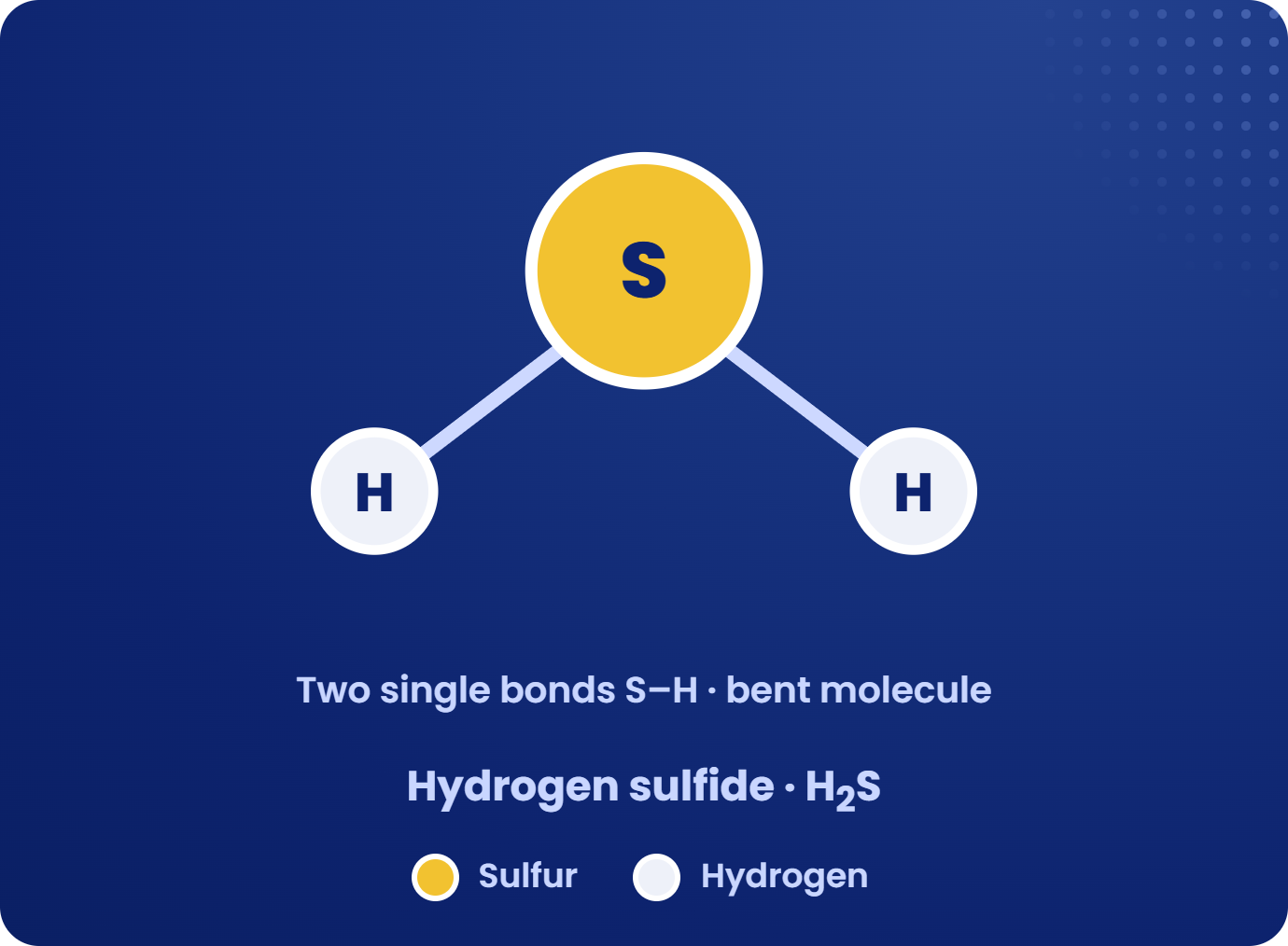
1Main properties
These values apply to pure hydrogen sulfide. Its flammability must be considered separately from its toxicity.
2What are the hazards?
H₂S is fatal if inhaled and extremely flammable. It is also very toxic to aquatic life.
It disrupts cellular respiration and can cause serious neurological, respiratory and cardiac effects. Severe poisoning may lead to coma, seizures and death.
Odour is never a reliable means of detection. At high concentrations, the gas can disable the sense of smell: disappearance of the odour does not mean the hazard has gone.
Combustion produces toxic fumes containing notably sulfur dioxide, SO₂.
3What occupational exposure limits apply?
The INRS factsheet dated February 2024 reports the following binding regulatory occupational exposure limits established in France in 2012:
| Reference period | ppm | mg/m³ |
|---|---|---|
| 8-hour average | 5 | 7 |
| Short-term, 15 minutes | 10 | 14 |
These limits do not, on their own, constitute gas detector alarm settings. Monitoring explosion hazards does not replace monitoring toxic exposure to H₂S.
4How can risks be prevented?
Prevention relies on enclosed processes wherever possible, capturing emissions and providing suitable ventilation. Equipment must be compatible with H₂S and the conditions of use.
INRS recommends frequent atmospheric checks, preferably continuous monitoring supplemented by an automatic alarm. Detectors must provide a suitable response, with verified specificity and accuracy.
Confined-space work requires specific preparation, including risk assessment, atmospheric testing and rescue arrangements. Operators must be familiar with alarm responses and emergency procedures.
Sources: INRS, Toxicological Factsheet No. 32, “Hydrogen sulfide”, February 2024 edition, in French; INRS occupational exposure limits database, “Hydrogen sulfide”, September 2022, in French.