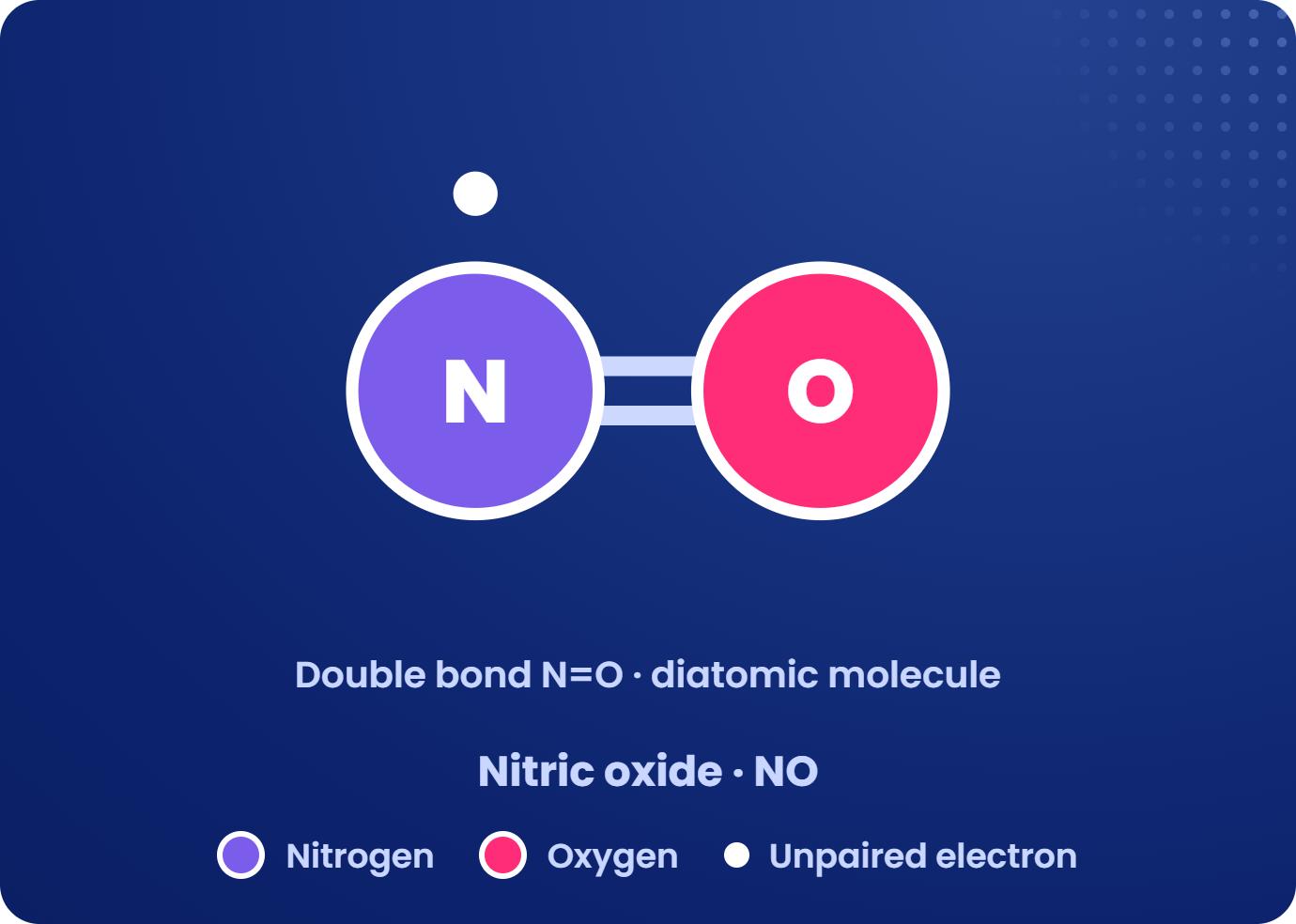
Nitric oxide, also known as nitrogen monoxide, is used notably in nitric acid production, calibration gas mixtures and certain controlled medical applications. It may also be present in combustion gases or generated during welding and the use of explosives.
At room temperature, it is a colourless gas with low solubility in water. On contact with oxygen in the air, it forms nitrogen dioxide, NO₂, whose hazards must also be considered.
1Main properties
These values apply to nitric oxide. They must not be confused with those of nitrogen dioxide, NO₂, or nitrous oxide, N₂O.
2What are the hazards?
Nitric oxide can impair oxygen transport in the blood by contributing to the formation of methaemoglobin, a form of haemoglobin that cannot transport oxygen properly.
Exposure to nitrogen oxides may cause eye and respiratory tract irritation, coughing and difficulty breathing. NO₂ formed in the air presents a significant lung hazard: severe respiratory injury may develop after a period of apparent improvement. The hazards of both NO and its oxidation product must therefore be considered.
3What occupational exposure limits apply?
The INRS factsheet dated July 2020 reports the following binding regulatory occupational exposure limit established in France in 2019:
| Reference period | ppm | mg/m³ |
|---|---|---|
| 8-hour average | 2 | 2.5 |
| Short-term | Not specified in this factsheet | Not specified in this factsheet |
This value applies to NO, rather than NO₂, which has its own limits. It does not, on its own, constitute a gas detector alarm setting.
4How can risks be prevented?
Prevention relies on enclosed processes wherever possible, capturing emissions at source and providing suitable ventilation. Monitoring must account for the nitrogen oxides that may be present, particularly the formation of NO₂.
Atmospheric exposure must be monitored regularly. Direct-reading instruments can supplement monitoring, provided their performance is suitable, interferences are considered, and verification and calibration procedures are followed.
Cylinders must be used and stored upright and secured, in a cool, ventilated area, protected from heat and in accordance with the supplier’s instructions. Equipment materials must be compatible with the gas.
Operators must be trained in the hazards and emergency procedures. Self-contained breathing apparatus must be available for emergency response.
Source: INRS, Toxicological Factsheet No. 133, “Nitrogen oxides”, July 2020 edition, in French.