Oxygen, also known as dioxygen, is used notably in steelmaking, chemical oxidation processes and medical applications.
At room temperature, it is a colourless, odourless gas. Air contains approximately 21% oxygen by volume. Essential for breathing, it can nevertheless create hazardous conditions when its concentration becomes too low or too high.
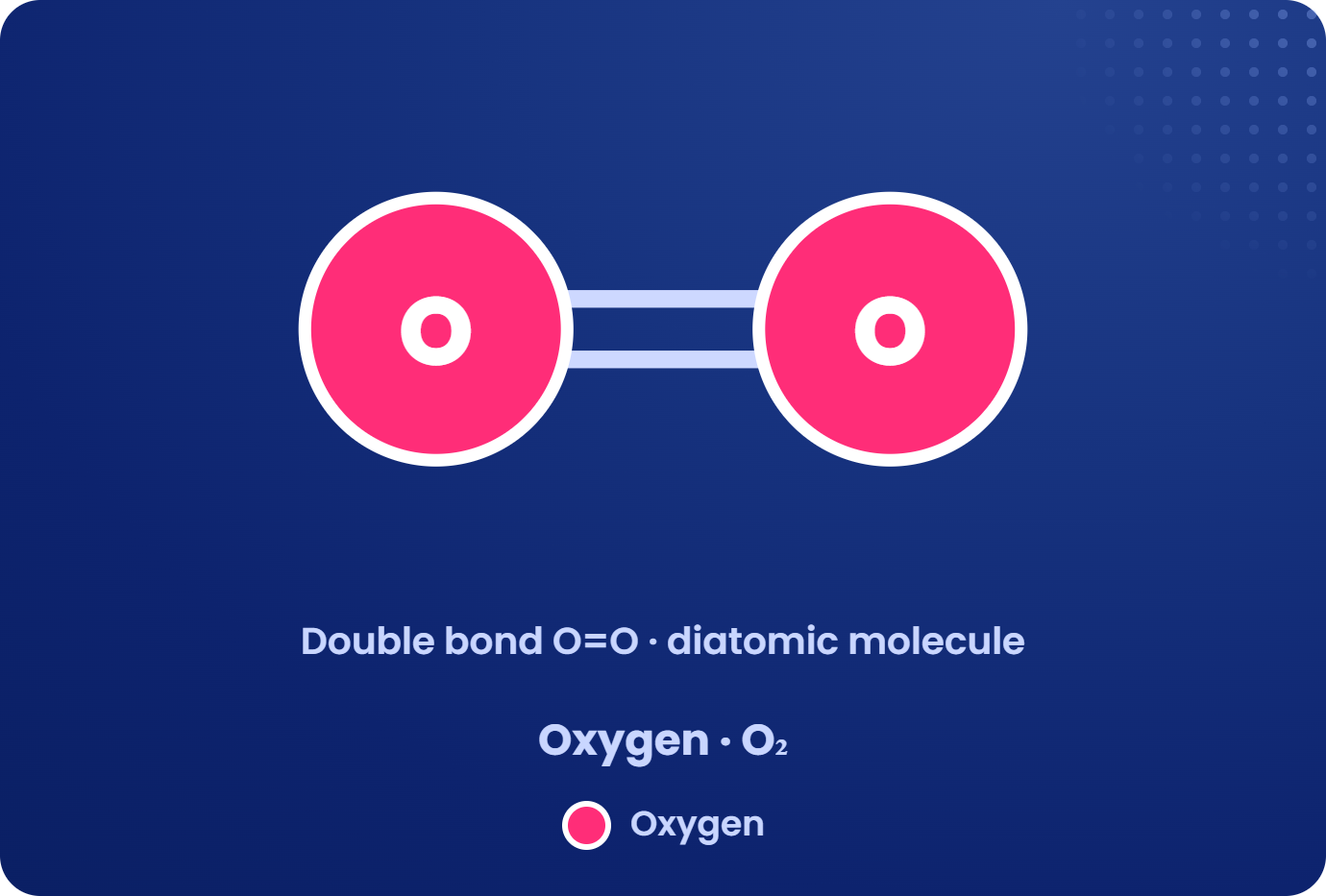
1Main properties
These values apply to pure oxygen. It may be supplied as a compressed gas or a cryogenic liquid.
2What are the hazards?
Oxygen does not burn itself, but supports and intensifies combustion. An oxygen-enriched atmosphere can make ignition easier and greatly accelerate a fire. Oils, greases and other combustible materials present a particular hazard in contact with oxygen.
Conversely, an oxygen-deficient atmosphere can cause asphyxiation, unconsciousness and death. This risk is particularly relevant where another gas displaces air.
Prolonged inhalation of high oxygen concentrations can also affect the lungs. Toxicity depends on exposure conditions, notably duration and pressure.
3What occupational exposure limits apply?
International Chemical Safety Card No. 0138 does not list an occupational exposure limit for oxygen.
Workplace atmospheric monitoring criteria include the oxygen concentration expressed as a percentage by volume. The usual concentration of approximately 21% in air does not, on its own, provide a complete assessment of safety.
Alarm thresholds must be determined according to the applicable framework, risk assessment and manufacturer’s instructions. A normal oxygen concentration does not rule out the presence of toxic or flammable gases.
4How can risks be prevented?
Prevention relies on controlling leaks, providing suitable ventilation and monitoring the atmosphere whenever justified by the risk assessment.
Equipment must be compatible with oxygen service and free from oil or grease. Prevent contamination of fittings, valves and accessories. Never use oxygen instead of ventilation air or to clean clothing.
Oxygen must be stored separately from combustible materials and reducing agents, in a suitable, ventilated location. Operators must understand the hazards of oxygen enrichment and oxygen deficiency.
Sources: ILO/WHO, International Chemical Safety Card No. 0138, “Oxygen”, October 1999, in English; Linde, “Oxygen enrichment / oxygen deficiency”, in French; Air Liquide, Gas Encyclopedia, “Oxygen”.