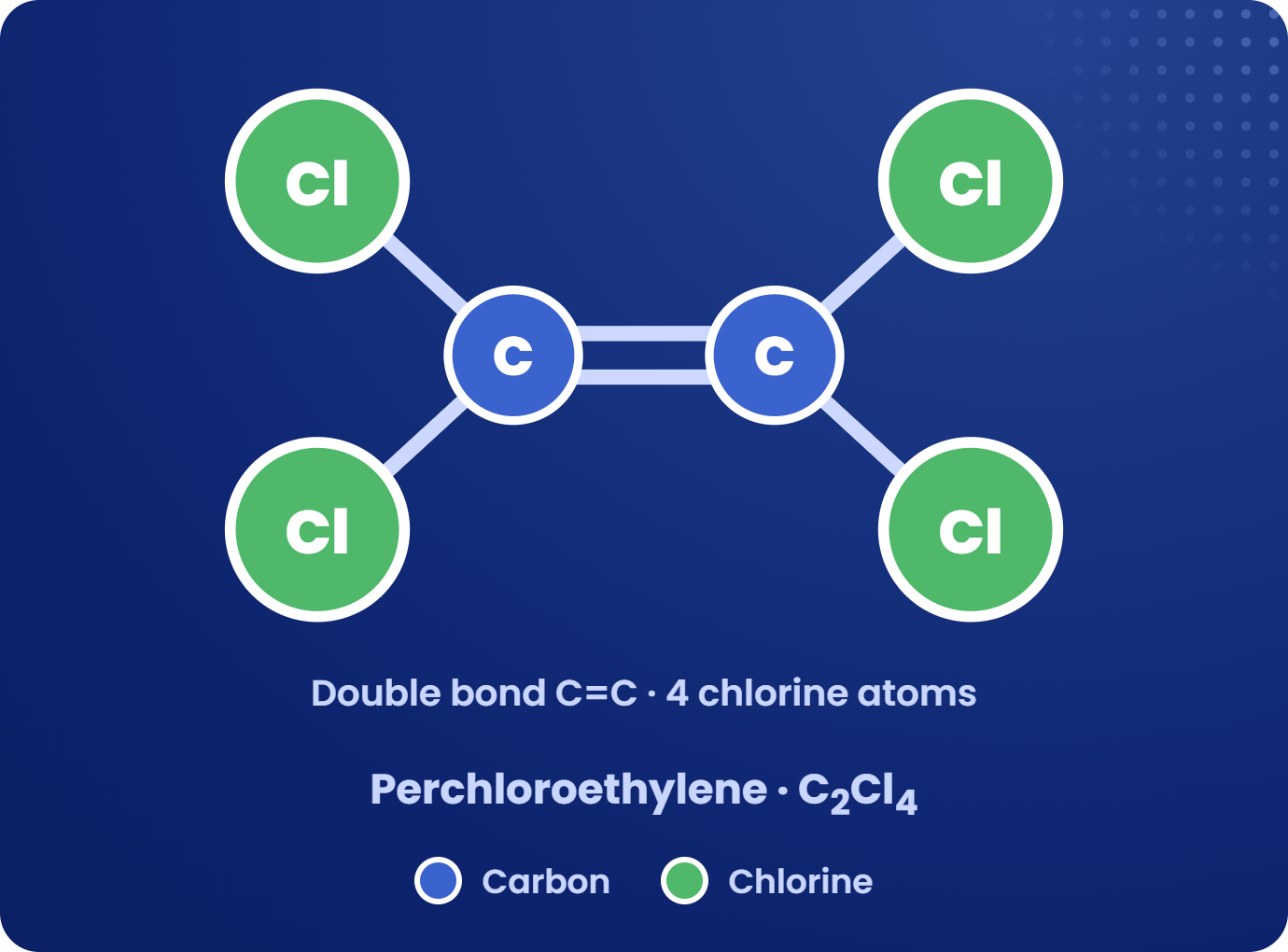
Perchloroethylene, also known as tetrachloroethylene or tetrachloroethene, is a chlorinated solvent used notably for degreasing metal parts, textile processing and certain chemical synthesis processes. Its use in dry cleaning is subject to restrictions in France.
At room temperature, it is a colourless, volatile liquid with a characteristic ether-like odour. It is practically insoluble in water and dissolves oils, greases and resins.
1Main properties
These values apply to perchloroethylene. Commercial products may contain stabilisers that must be considered in the risk assessment.
2What are the hazards?
Inhalation may cause central nervous system depression, with headaches, dizziness, drowsiness and impaired coordination. At very high concentrations, unconsciousness, respiratory disorders and heart rhythm disturbances may occur.
Prolonged contact can cause skin and eye injuries. Repeated exposure may also cause neurological effects, including impaired memory and concentration.
Perchloroethylene is classified as a Category 2 carcinogen under the CLP Regulation, with the hazard statement “Suspected of causing cancer”. It is also toxic to aquatic life with long-lasting effects.
It is considered non-combustible under normal conditions of use, but heating can generate toxic decomposition products, including phosgene and hydrogen chloride.
3What occupational exposure limits apply?
The INRS occupational exposure limits database reports the following binding regulatory occupational exposure limits established in France in 2012:
| Reference period | ppm | mg/m³ |
|---|---|---|
| 8-hour average | 20 | 138 |
| Short-term, 15 minutes | 40 | 275 |
The skin notation indicates that skin absorption may contribute to overall exposure. These limits do not, on their own, constitute gas detector alarm settings.
4How can risks be prevented?
Prevention relies on enclosed processes wherever possible, capturing vapours at source and providing suitable ventilation. Atmospheric exposure must be assessed regularly.
Prevent inhalation and contact with skin or eyes. Personal protective equipment must be selected according to the risk assessment and safety data sheet.
Keep operations that could cause thermal decomposition, particularly hot work, away from the substance. Prevent releases into the environment.
For dry cleaning, installation-specific rules must be followed: the use of perchloroethylene machines in dry-cleaning premises adjoining premises occupied by third parties has been prohibited in France since 1 January 2022.
Sources: INRS, Toxicological Factsheet No. 29, “Tetrachloroethylene”, updated November 2025, in French; INRS occupational exposure limits database, “Perchloroethylene”, October 2022, in French.