Phosgene, also known as carbonyl dichloride or carbon oxychloride, is used as a chemical intermediate, notably in the manufacture of isocyanates and polycarbonates.
It can also form accidentally during the decomposition of certain chlorinated solvents, particularly near flames, hot surfaces or welding operations.
At room temperature, it is a colourless or slightly yellowish gas that is heavier than air. Its odour is detectable at concentrations above occupational exposure limits, so it does not provide a reliable warning.
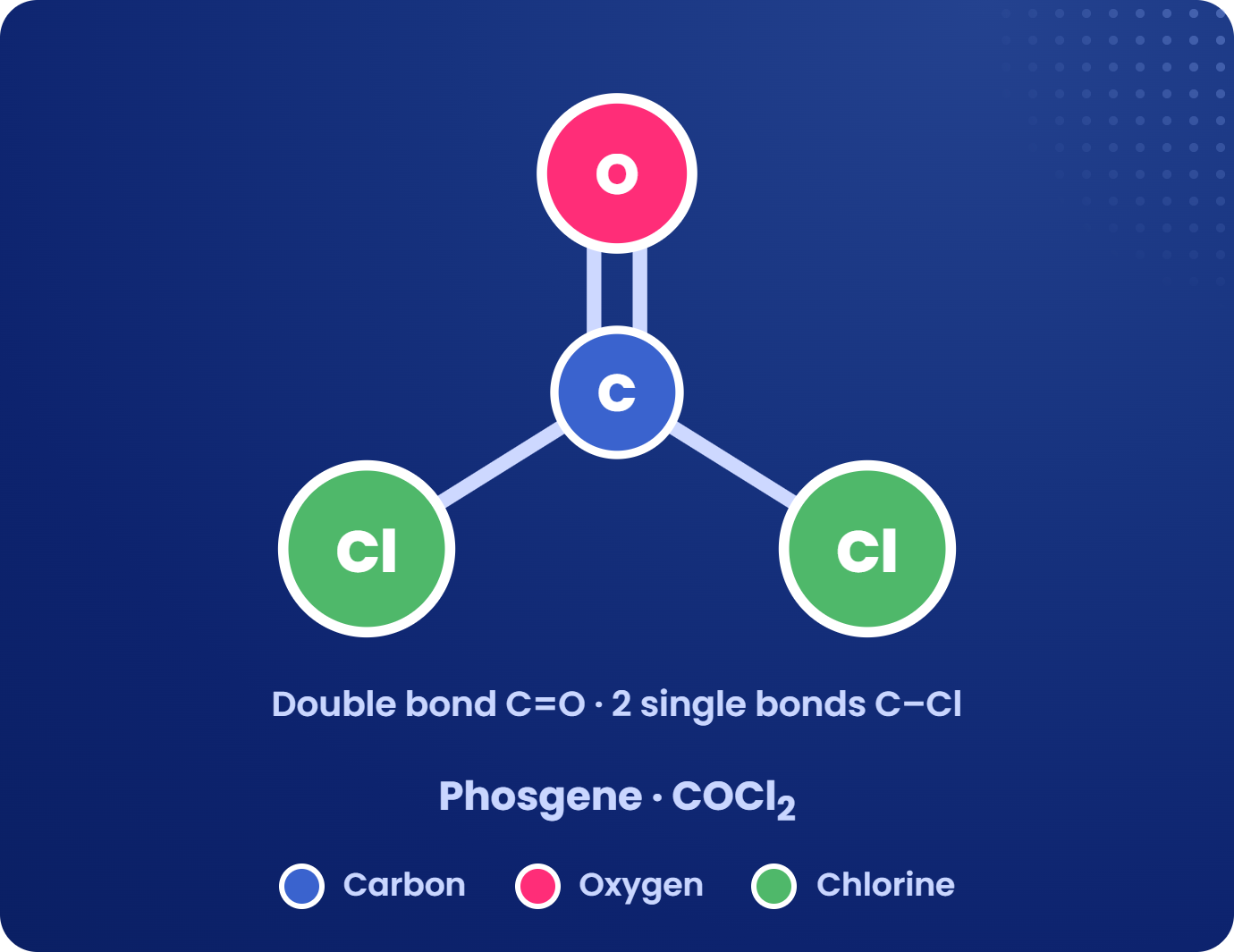
1Main properties
These values apply to pure phosgene. Its low boiling point makes it highly volatile.
2What are the hazards?
Phosgene is fatal if inhaled and corrosive. It can cause serious eye and skin injuries, particularly following contact with the liquefied substance.
The lungs are its primary target. Inhalation can cause severe lung injury, including pulmonary oedema and respiratory distress. Lasting, disabling respiratory effects are possible.
The absence of immediate symptoms or an apparent improvement does not rule out poisoning. Suspected exposure requires urgent medical assessment because of the risk of delayed effects.
3What occupational exposure limits apply?
The INRS factsheet dated June 2025 reports the following binding regulatory occupational exposure limits established in France in 2007:
| Reference period | ppm | mg/m³ |
|---|---|---|
| 8-hour average | 0.02 | 0.08 |
| Short-term, 15 minutes | 0.1 | 0.4 |
These limits do not, on their own, constitute gas detector alarm settings. The detection system must be sufficiently sensitive and suitable for the conditions of use.
4How can risks be prevented?
Prevention relies on closed systems, capturing emissions at source and providing suitable ventilation. It also covers operations that may accidentally generate phosgene.
Equipment, fittings and hoses must be compatible with the substance and the operating pressure. Cylinders must be kept upright and secured.
Prevent inhalation and contact with skin or eyes. Reduce the number of exposed workers and train operators in the hazards and emergency procedures.
Source: INRS, Toxicological Factsheet No. 72, “Phosgene”, updated June 2025, in French.