Phosphine, also known as phosphane or phosphorus trihydride, is used notably for fumigating stored food products and as a doping gas in semiconductor manufacturing. It can also be released accidentally when metal phosphides come into contact with water or an acid.
At room temperature, it is a colourless gas, slightly heavier than air. Pure phosphine is odourless; impurities may give it a garlic-like or decaying-fish odour. Smell is not a reliable means of monitoring exposure.
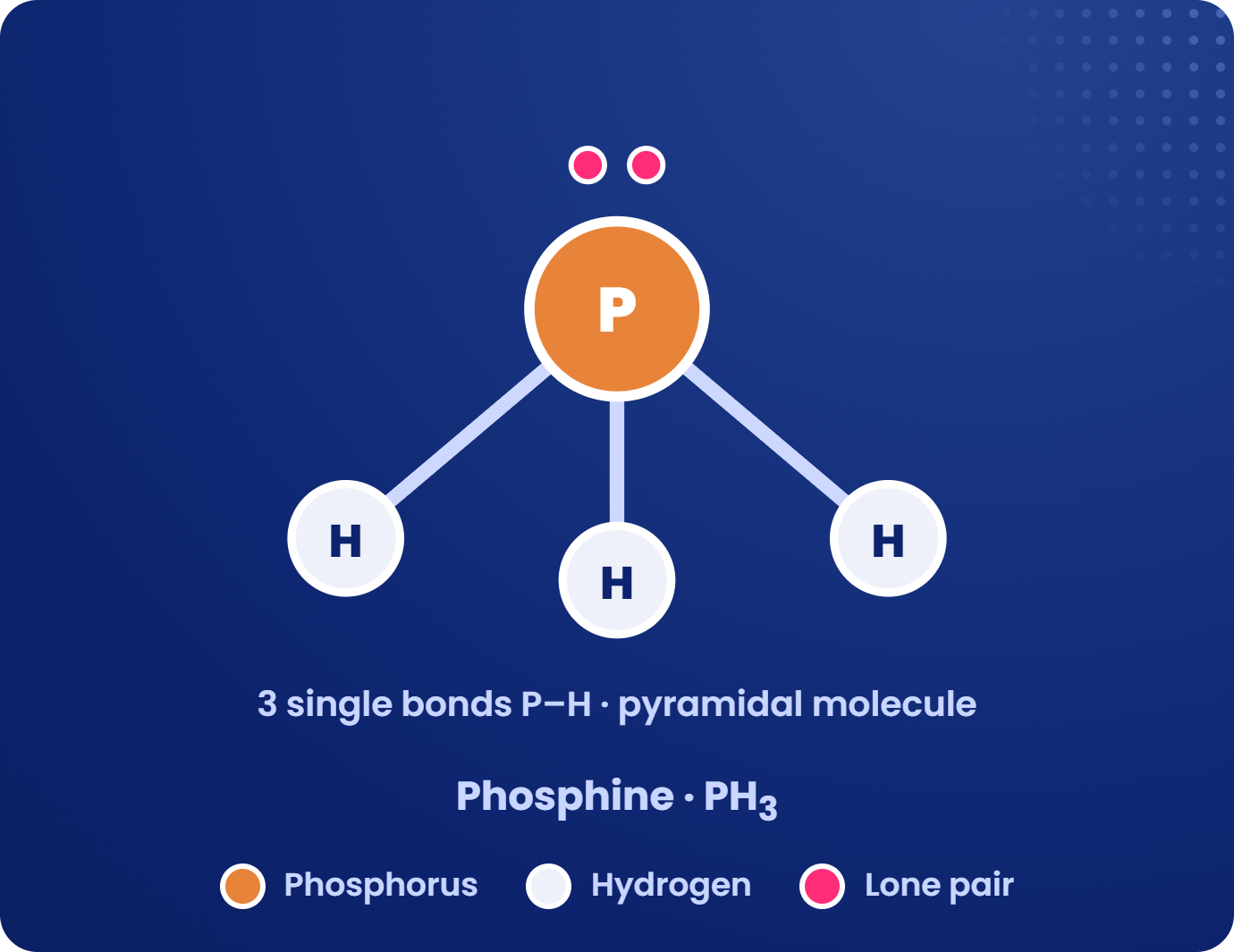
1Main properties
These values apply to phosphine. Its purity and the presence of impurities strongly influence its ignition behaviour.
2What are the hazards?
Phosphine is fatal if inhaled, extremely flammable and corrosive. It is also very toxic to aquatic life.
Exposure may cause headaches, dizziness, digestive symptoms, respiratory irritation and heart rhythm disturbances. Severe poisoning can cause seizures, coma, cardiac injury and delayed pulmonary oedema, which may develop within 48 to 72 hours.
Respiratory, muscular or neurological effects may persist after acute exposure.
Impurities, particularly diphosphine, can make the gas spontaneously flammable on contact with air, even at low temperatures. It reacts violently with oxidising agents.
3What occupational exposure limits apply?
The INRS factsheet dated February 2024 distinguishes the following values for France:
| Reference period | ppm | mg/m³ | Status |
|---|---|---|---|
| 8-hour average | 0.1 | 0.14 | Binding regulatory occupational exposure limit, established in 2007 |
| Short-term, 15 minutes | 0.2 | 0.28 | Indicative regulatory occupational exposure limit, established in 2004 |
These values have different legal statuses. They do not, on their own, constitute gas detector alarm settings.
4How can risks be prevented?
Prevention must cover both phosphine use and operations that may release it. It relies on process containment, capturing emissions and providing suitable ventilation.
Fumigation operations and opening potentially fumigated containers require specific procedures, including atmospheric testing before workers are exposed, where warranted by the risk.
Metal phosphide residues must not be cleaned using wet methods, as this may promote phosphine generation. Operators must be trained in the hazards and emergency procedures.
Detection equipment must be suitable for phosphine, with sufficient sensitivity and verified response specificity and accuracy.
Source: INRS, Toxicological Factsheet No. 179, “Phosphine”, February 2024 edition, in French.