Styrene is used mainly in the manufacture of polystyrene, polyester resins, ABS plastics and synthetic rubbers. It is notably used in the production of glass-fibre-reinforced composites.
At room temperature, it is a colourless to yellowish liquid with a characteristic odour. It has low water solubility but is miscible with many organic solvents. It is generally supplied with a polymerisation inhibitor.
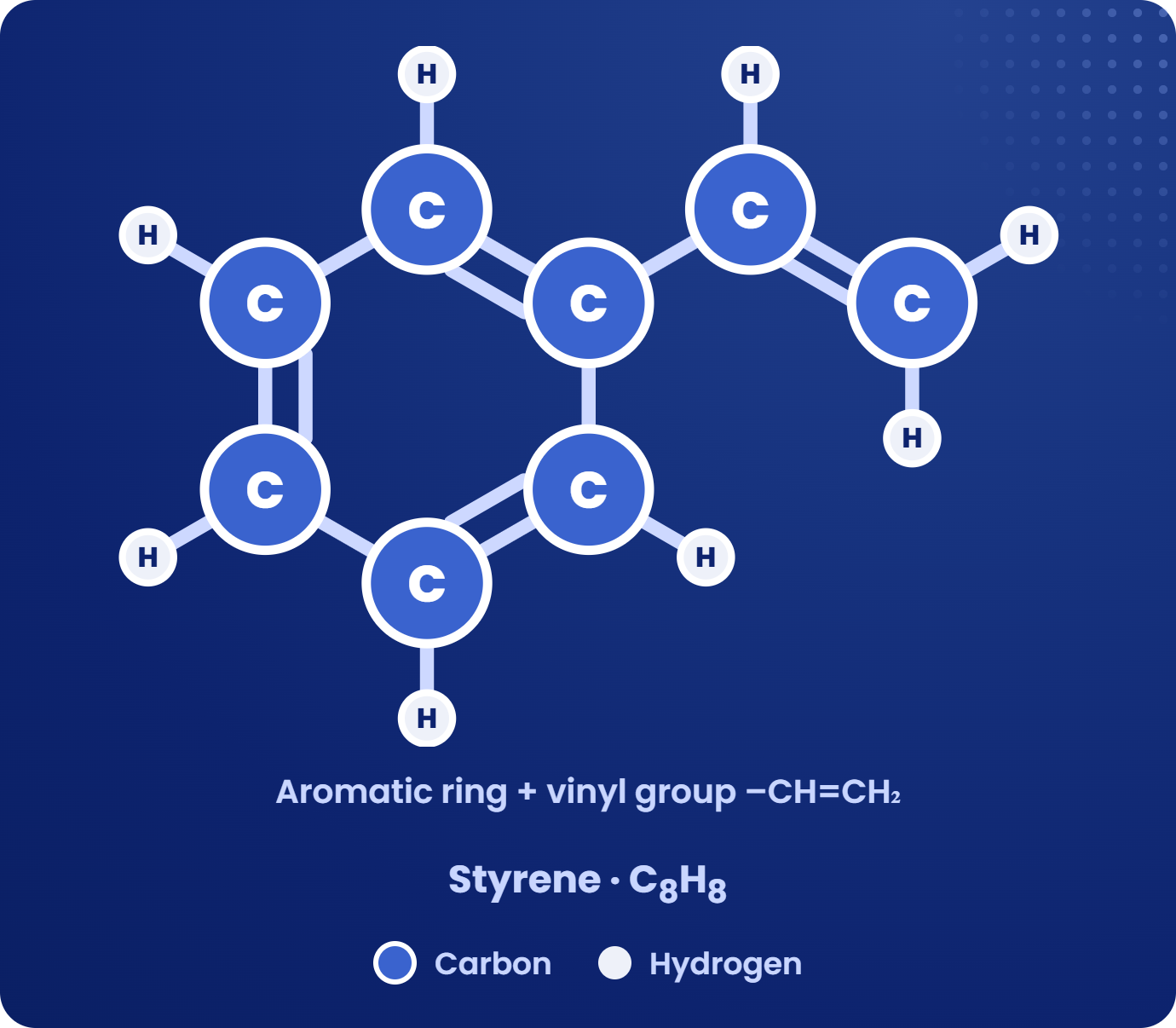
1Main properties
INRS reports flammability limits in air of 0.9 to 1.1% for the lower limit and 6.1 to 6.8% for the upper limit, depending on the reference. These values do not directly define gas detector alarm settings.
2What are the hazards?
Styrene is flammable and harmful if inhaled. It causes skin irritation and serious eye irritation.
It is classified as a Category 2 reproductive toxicant, with the hazard statement “Suspected of damaging the unborn child”. Its labelling also identifies a risk of serious damage to the auditory system. Combined exposure to styrene and noise must therefore be included in the risk assessment.
The inhibitor present in commercial products requires appropriate storage conditions and concentration checks: maintaining styrene’s stabilisation is part of the safety measures.
3What occupational exposure limits apply?
The INRS occupational exposure limits database, updated in January 2026, reports the following binding regulatory occupational exposure limits for France:
| Reference period | ppm | mg/m³ |
|---|---|---|
| 8-hour average | 23.3 | 100 |
| Short-term, 15 minutes | 46.6 | 200 |
The skin notation indicates that skin absorption may contribute to overall exposure. The noise notation indicates the possibility of hearing damage during combined exposure.
These limits do not, on their own, constitute gas detector alarm settings.
4How can risks be prevented?
Prevention must limit inhalation and contact with skin or eyes. Gloves, protective clothing and eye protection must be compatible with styrene and suitable for the working conditions.
Store the stabilised product in a cool, well-ventilated location, protected from sunlight, heat and ignition sources, away from oxidising agents, strong acids and polymerisation catalysts.
Prevent electrostatic discharges, provide suitable secondary containment and follow the supplier’s instructions regarding stabilisation and storage life. Safety showers and eyewash facilities must be accessible.
Sources: INRS, Toxicological Factsheet No. 2, “Styrene”, November 2019 edition, in French; INRS occupational exposure limits database, “Styrene”, updated January 2026, in French.