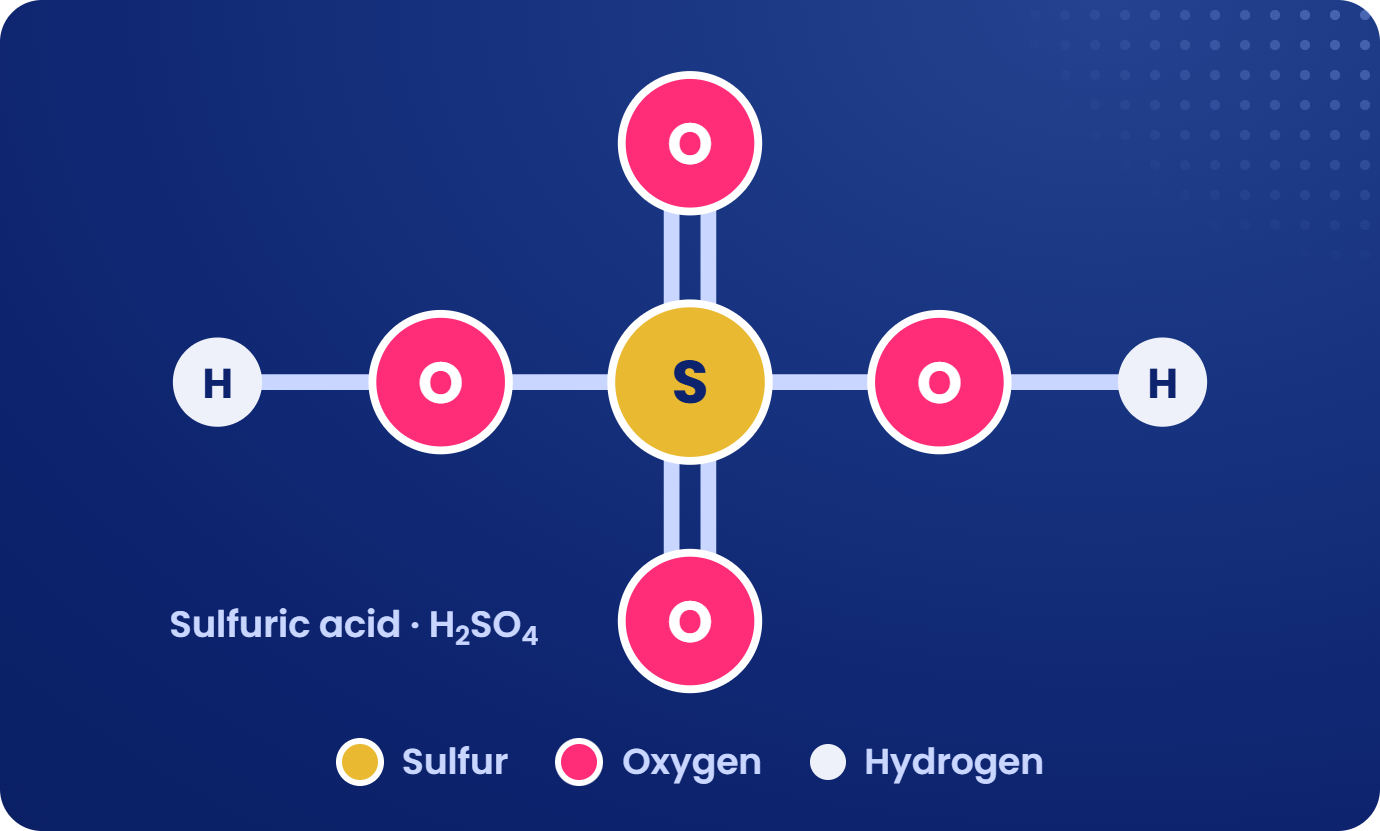
Sulfuric acid is used in the manufacture of fertilisers and numerous chemicals, metal treatment, petroleum refining and lead-acid batteries. At room temperature, pure sulfuric acid is an oily, colourless and odourless liquid. It is supplied at various concentrations, which influence its properties and hazards. Although it has very low volatility at room temperature, it may nevertheless be present in the air as mists or aerosols during certain operations.
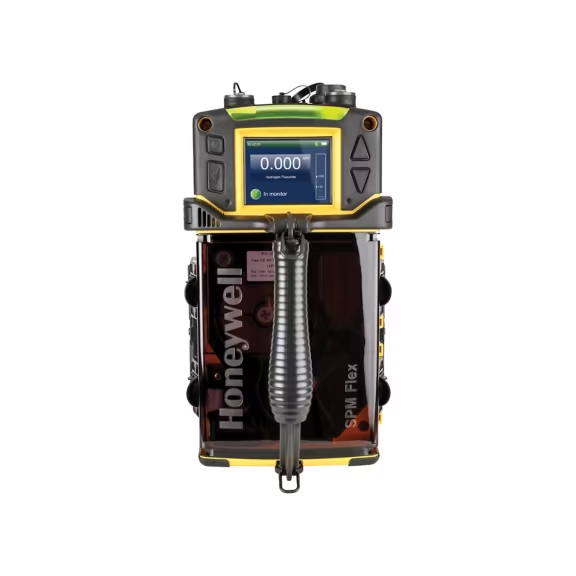
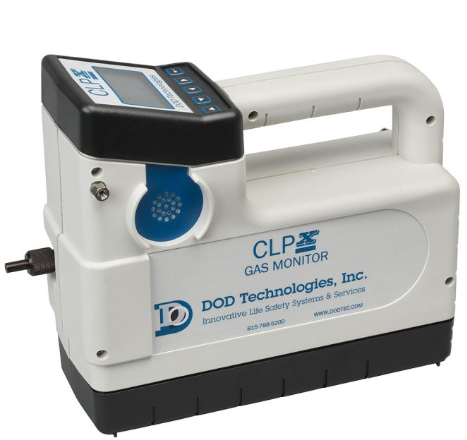
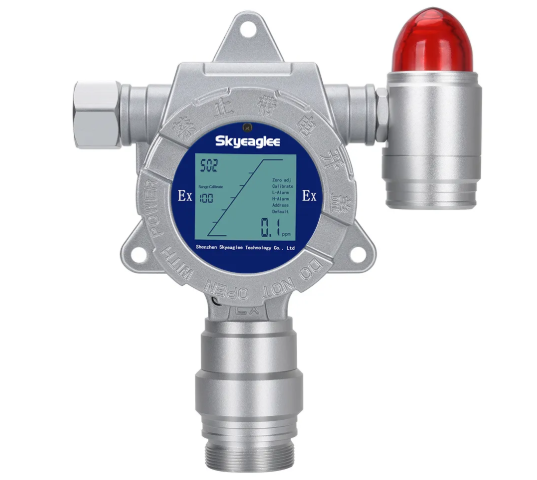
Suggested detectors
1Key properties
Values must always be associated with the corresponding concentration. Fuming sulfuric acid, or oleum, contains dissolved sulfur trioxide and has specific characteristics.
2What are the hazards?
Sulfuric acid is highly corrosive: it can cause severe skin burns and eye damage that may result in loss of vision. Inhaling mists or aerosols can damage the respiratory tract. Pulmonary oedema may develop after a delay of up to 48 hours following exposure.
Repeated exposure may cause dental erosion and respiratory disorders. Mists from strong inorganic acids containing sulfuric acid are classified as carcinogenic to humans by the International Agency for Research on Cancer (IARC). This classification applies to these mists and must not be attributed indiscriminately to every sulfuric acid solution.
Sulfuric acid is not flammable, but certain reactions can cause a fire or explosion. Its reaction with some metals can release flammable hydrogen. Mixing it with water releases substantial heat and may cause dangerous splashing.
3What are the occupational exposure limits?
The INRS occupational exposure limit database, updated in September 2022, reports the following values for France:
| Reference period | Value | Status and clarification |
|---|---|---|
| 8-hour time-weighted average | 0.05 mg/m³ | Indicative regulatory limit, applicable to the thoracic fraction of the aerosol |
| Short-term exposure | 3 mg/m³ | Non-regulatory limit issued through a ministerial circular |
These values do not, on their own, define detector alarm settings. A gas measurement in ppm does not directly replace an assessment of exposure to sulfuric acid aerosols in mg/m³.
4How can the risks be prevented?
Prevention relies on working in closed systems wherever possible, capturing emissions at source and providing adequate ventilation. Operations must minimise splashes and the formation of mists or aerosols.
When diluting, slowly add the acid to water in small quantities while stirring. Never add water to the acid.
Gloves, protective clothing, eye protection and any necessary respiratory protection must be selected according to the concentration, working conditions and risk assessment. Safety showers and eyewash facilities should be available nearby.
Store in compatible, closed and labelled containers, in a cool, ventilated area with suitable secondary containment, away from incompatible substances.
Sources: INRS, Toxicological Factsheet No. 30, “Acide sulfurique”, November 2020 edition; INRS occupational exposure limit database, “Acide sulfurique”, updated September 2022.